Holy heatwave! For many of our students, this week marks the last day of school, which means summer break has officially arrived.
On a personal note, this also marks the end of my daughter's middle school years and the beginning of high school. As any FCPS middle school parent knows, surviving those early start times feels like an accomplishment in itself! It's hard to believe that I now have a high school student of my own. I started DC College Counseling well before she was born, so it's a little surreal to suddenly find myself thinking about high school course selection, extracurriculars, and college planning not just as a counselor, but as a parent. Time really does fly.
Ironically, I work pretty hard to avoid talking about college admissions with my own children. Kids today have enough pressure without having a mom who owns a college counseling company, so I tend to go in the opposite direction and rarely bring it up at all. Honestly, I don't even think they know (or care) where their dad or I went to college.
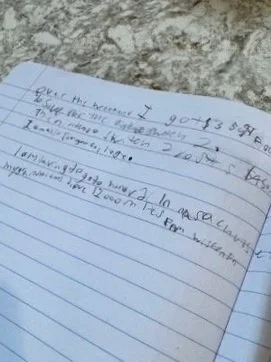
With that context in mind, I had to laugh when my son's third-grade journal came home from school this week. I can promise you I had absolutely nothing to do with this. If you can't read his handwriting (join the club), he proudly informs his teacher that he is saving money so he can "go to Harvard in Massachusetts."
Ambitious? Absolutely. Realistic? Let's just say he's got some time…
BIGGEST COLLEGE-RELATED NEWS OF THE WEEK
THE PUSH TO BRING BACK STANDARDIZED TESTING REQUIREMENTS
Last week, we shared some pretty big news as hundreds of faculty at UC schools signed an open letter requesting that SAT scores become a requirement for admission. The main reason is that faculty in STEM fields are seeing some really poor performance in math in recent years, making it hard to teach more advanced concepts. It looks like officials at UC have listened, as it was just announced by the UC Academic Senate that a committee will be reviewing the issue. Not all faculty are on board with the idea, and a change to standardized testing requirements would still have to be approved by UC’s Board of Regents. But it’s definitely something to keep an eye on if you’ve been considering applying to a UC school.
And this might be the start of a trend, as Yale just announced that it will once again require SAT or ACT scores starting with the next admissions cycle. Like many colleges around the country, Yale relaxed its requirements for standardized testing during the pandemic, making submission of scores optional. However, after reviewing its admissions policies, the university decided it was time to bring those test scores back. In some ways, it's an attempt to ensure fairness while also making admissions decisions more predictive of academic success. I think Dean Pericles Lewis sums up their perspective well: “SAT and ACT scores are strong predictors of a student’s future Yale academic performance, and, when considered thoughtfully as part of a whole person review, they can help identify well-prepared candidates, especially those from socio-economically disadvantaged backgrounds.” And Yale isn’t alone: Columbia University also just announced that it will once again require SAT or ACT scores for students seeking to enroll for Fall 2028! I suspect a similar thought process at work here. While test-optional policies aren’t going to disappear overnight, it’s pretty clear that there’s a push to bring back standardized testing as an admissions requirement. So if you’re taking your SAT or ACT for the first time, or hoping to improve your score, it’s probably worth putting some extra time into test prep.
AS TOP-SCHOOL PRICES SOAR, SO DOES AID
It’s hardly surprising that costs at some of the most prestigious colleges in the country are now rising above six figures – although it’s still pretty staggering to think that there are now over 16 schools that top a $100,000 price tag! And while most Ivy League schools can get away with those costs, some smaller liberal arts colleges are feeling the competition from state schools as students think more carefully about cost versus return. Is the debt really worth it when job security feels so uncertain? But the same schools with such exorbitant sticker prices are also offering some of the strongest student aid packages. For families earning below the $200k annual threshold, schools like Harvard and Penn offer tuition-free options, and other top colleges on the list offer merit aid for many first-time, full-time students as high as 57%. So don’t write off your ideal school just because of its price tag; sometimes the most expensive colleges end up being the most affordable thanks to generous scholarships and financial aid.
DOJ TARGETING MEDICAL SCHOOL ADMISSIONS … AGAIN
The Justice Department once again has medical school admissions practices under scrutiny, announcing that it’s opening an investigation at 15 more schools over concerns that the institutions could be violating race-based admissions regulations. This comes only a month after the DOJ announced investigations involving Yale and UCLA, although it has yet to name any of the colleges in this recent claim of racial discrimination. Meanwhile, defenders of the admissions practices at med schools worry that the DOJ doesn’t fully understand the criteria for choosing the best potential future physicians. Alison Whelon, the chief medical officer of the Association of American Medical Colleges, pointed out that “It takes more than test scores to become a good doctor,” arguing that diverse perspectives in the classroom better prepare future doctors to serve diverse populations. Her opinion reflects recent pushback in higher education against the administration's attempts to intervene in the admissions process, as many feel those attempts could be coming from a misunderstanding of the SCOTUS ruling. One thing definitely seems certain: this debate about diversity in admissions practices is not going away anytime soon.
SPELMAN COLLEGE’S NEWEST PRESIDENT
The country’s top-ranked HBCU, Spelman College, just announced the appointment of its next president: Dr. Ayanna Howard. This comes as exciting news as Howard is an incredibly celebrated scholar in the world of robotics and AI. Howard has published extensively and earned more STEM leadership appointments and accolades than we could possibly list (although you can read about them here). What we think is particularly great is her commitment to a very human-focused approach to technology, and one that starts in the university classroom. Spelman is already a national leader in preparing Black women to pursue PhDs in STEM fields, and Howard’s appointment is a perfect fit!
ACCOMMODATIONS REQUESTS DUE AUGUST 3
For our Fairfax County clients, if your student is entering 10th, 11th, or 12th grade and might need disability or multilingual accommodations for taking the PSAT or SAT, you will need to submit a direct request by the August 3 deadline. Make sure to review the request process carefully and complete all required forms. The tests are administered by the College Board itself, so even if your student already has accommodations in the classroom, you’ll still need to go through this process.
Deadlines will be similar everywhere, so our clients outside FCPS should also make sure to check with their school testing coordinators to find out what needs to be done and when!

BEST ARTICLES OF THE WEEK
One of the greatest joys of visiting a college campus is really just the beauty of the space; many campuses – even some urban ones – are surrounded by gorgeous gardens, plentiful trees, and the incredible architecture of the many study halls and research centers. But what happens to that space when a college closes? As college enrollments have been declining in recent years, some colleges have been forced to shut down, leaving those beautiful campuses empty. Occasionally they get swallowed up by other schools nearby, but the rural Green Mountain College in Vermont, which closed in 2019, is part of another story: private developers. Raj Bhakta, whiskey-maker and former contestant on “The Apprentice,” purchased the 115-acre campus with plans to create a space for faith-based education that would strengthen his idea of American values. And his primary vision? Alcohol (no, I’m not kidding). Skeptical of higher education, Bhakta claims he would like to see young people connecting, instead, over beer. Like area legislators, I have some questions about Bhakta’s plans, and so far, not much has been done with this space. But the issue does speak to concerns about the role college campuses play in local communities as well as questions about what will happen to these spaces if enrollments continue to decline. If your family has been shopping for a sprawling plot of rural land dotted with abandoned classroom buildings and residence halls, maybe this is your market!
Of course, we know your real dream is to be on a vibrant college campus at a school that is not only open but thriving. But admissions is tough, and while we here at DCCC do everything we can to help your kids get into their top-choice schools, some students are finding other ways to attend the universities of their dreams, even if they aren’t admitted through the traditional route. Many flagship state schools have alternative-enrollment options, such as offering dual-credit through a nearby community college, or allowing students to take online courses rather than sitting in the physical classroom. While these students are missing out on many of the perks of the first-year experience – which can be really important for building a sense of community and having an early support network – they are finding other ways to stay involved in campus culture, like attending tailgating events and joining Greek life. These options can be more affordable, too. Programs like the University of Florida’s Pathway to Campus Enrollment, which requires online schooling before transitioning students to in-person courses, has seen major growth in recent years, even if there are drawbacks like limitations on the courses offered. I can’t say this is a route we would recommend, but I do admire the tenacity of these students who are finding creative ways to make their college dreams happen!
The shape of those dreams is changing, however, as higher education is going through some major upheavals that point towards a very different future. Schools like Green Mountain, mentioned above, have certainly felt one of those shifts: declines in enrollment leading to complete closures. The effects of the enrollment cliff – a drop in births following the 2008 financial crisis and leading to fewer potential students – are already being felt at smaller regional colleges that simply don’t have enough students to stay afloat. And fewer high school students are convinced of the value of a college degree given an uncertain job market and exorbitant enrollment costs. Plus, A.I. has created a no-win situation for colleges that are simultaneously partnering with A.I. to stay ahead of the tech curve while still struggling to navigate student reliance on LLMs to complete assignments.
Meanwhile, incoming student performance continues to decline, and once-challenging college courses may be replaced by classes that cover what students should have already learned in high school – one of the reasons we’re seeing that increased push to bring back standardized testing as an admissions requirement. Not every change will be negative, at least. Community colleges are likely to benefit as students looking for affordable alternatives pursue associate’s degrees before transitioning to a four-year program. We might also see universities reconsider spending priorities, potentially reducing administrative costs while preserving academic programs and faculty resources. While no one knows exactly how these trends will play out, it's clear that higher education is entering a period of significant change, and colleges and universities need to clarify what they’re offering if they plan to maintain their present price tags.
OFFICE HAPPENINGS
As high school has finally ended for most of our clients – congrats Class of 26!! – we’re starting to see more kids signing up for meetings. That’s great!! I know you all are looking forward to some well-earned rest (students and families alike), and you certainly deserve it. But it’s important to stay focused on preparing those college application materials. We’re hard at work getting Common App essays polished and also preparing our generic supplemental essays so that we can hit the ground running once colleges start releasing their prompts, with a few having dropped already!
Enjoy the summer sun – and stay hydrated!
check out some of our other sat-related posts: