AI

Weekly Update: July 14

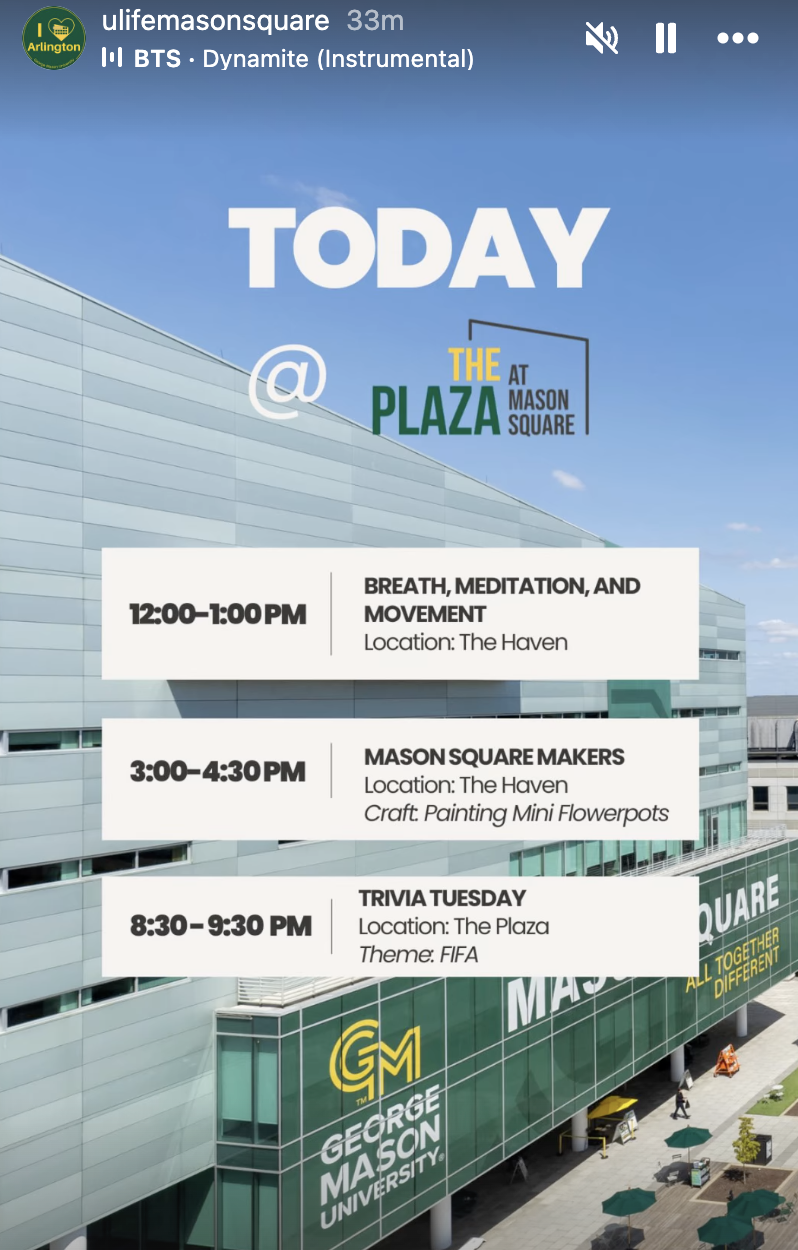
Every time I drive past the Plaza at Mason Square in Arlington (which is multiple times a week!), I think about how I need to share it on the blog, so here goes! The Plaza at Mason Square, located between Clarendon and Virginia Square near George Mason's incredible Fuse building (which we featured last year), is hosting a ton of fun, free community events throughout the summer. Our clients in the Northern Virginia area should definitely check it out, especially if they have any interest in George Mason.

We always stress the importance of campus tours to get a sense of a university's culture, but attending events like these can be just as valuable. The Plaza's summer programming reflects George Mason's commitment to community engagement and gives prospective students a chance to experience the university in a different way. I also think it's a great way to see what makes George Mason unique. There's so much more to the university than the Fairfax campus alone, and I don't think most students realize that. If you decide to stop by, the Mason Square Makers events (like DIY sunglasses and notebook decorating) especially caught our attention!

These are exactly the kinds of experiences that can help you better understand student life beyond the standard campus tour. And if you're looking for more ideas, be sure to check out our post from last year on Colleges with the Coolest Summer Events!

And now, let's get into this week's higher ed news!

BIGGEST COLLEGE-RELATED NEWS OF THE WEEK

NOTRE DAME INVESTIGATES SEXUAL MISCONDUCT ALLEGATIONS

The University of Notre Dame has placed a residence hall rector on leave while it investigates anonymous allegations of sexual misconduct that were shared through social media. The allegations, which were posted on an Instagram account in June, involve the rector of McGlinn Hall, who has held the position since 2024. According to university officials, Notre Dame has not received any formal or first-hand complaints at this time, but the Office of Institutional Equity has launched an investigation and is working to identify any individuals who may have information related to the claims. The university has encouraged members of the campus community to report concerns through official channels while the investigation proceeds. This news comes shortly after Notre Dame released a report examining failures in how the university previously handled allegations of sexual abuse involving a former priest accused of grooming male students in the 1980s and 1990s. The university stated then that it is taking steps to strengthen its response process moving forward, and we’re curious to see how they continue to handle this current investigation.

While the current allegations have not been substantiated, they are quite serious and warrant a thorough investigation. Families considering Notre Dame should remember that evaluating a college involves more than academics and campus traditions. It's also worth paying attention to how institutions respond to allegations involving student safety, transparency, and accountability. Families considering Notre Dame may also wish to review resources such as Share Your Story Notre Dame, an Instagram account where members of the community have shared personal experiences related to sexual misconduct.

FORMER BUCKNELL COACH CHARGED IN STUDENT ATHLETE’S DEATH

A former Bucknell University strength coach has been charged with felony hazing and involuntary manslaughter following the 2024 death of football player Calvin Dickey Jr. Prosecutors argue that Dickey collapsed after a punishing workout and that signs of medical distress were not handled appropriately before he later died. Dickey had been diagnosed with sickle cell trait, an inherited condition that requires precautions such as adequate rest and hydration. According to a civil lawsuit filed by Dickey's parents, the university knew he had sickle cell trait, but failed to take precautions that could have prevented his death. For now, the former coach has denied the allegations, and the case is still working its way through the courts. But this story, like the one above, serves as a good reminder to speak up about issues involving student health and safety. Many students expect college – and college athletics – to be challenging, but those challenges should never come at the expense of their well-being.

DECLINE IN PH.D. ADMISSIONS AMID RESEARCH FUNDING UNCERTAINTY

Some of the nation’s top research universities are admitting significantly fewer Ph.D. students this year, with admissions to doctoral programs dropping by approximately 15% compared to last year. University leaders point to ongoing uncertainty surrounding federal research funding, including grant delays and budget cuts. While domestic applications have remained relatively steady, international applications have declined, adding to concerns about the future pipeline of researchers in the U.S. This story doesn’t just affect graduate students; for high schoolers applying to research universities, it matters too. Graduate students are responsible for much of the research conducted at major universities and often mentor undergraduates, teach discussion sections, and help run laboratories. And if these trends continue, they could influence other research opportunities and academic experiences available to undergraduates in the coming years.

BUDGET CUTS ACROSS HIGHER ED

As colleges finalize budgets for the coming academic year, another wave of layoffs, program reductions, and restructuring has swept through higher education. Several universities announced significant cuts over the past month, including the University of Minnesota (230 positions), Johns Hopkins University (roughly 110 positions), The New School, the University of Arizona, and the University of Denver, while other institutions eliminated academic programs in an effort to balance their budgets. Many colleges cited declining enrollment, rising operations costs, or uncertainty surrounding federal research funding as reasons for the cuts.

While the news can sound alarming, it’s important to keep it in perspective. Most students will never notice the effects of a handful of staff reductions, and many of these changes happen behind the scenes. However, we’d encourage families to pay attention when universities begin announcing repeated layoffs, hiring freezes, or program closures, as these decisions can sometimes affect class offerings, student services, research opportunities, and campus life over time.

BEST ARTICLES OF THE WEEK

Artificial intelligence continues to reshape the college experience, from the classroom to career planning. A recent Wall Street Journal article highlighted how some high-achieving college students are moving away from traditional summer internships in finance and technology to pursue their own AI-focused startups. Instead of spending summers preparing for career paths that are increasingly uncertain, these students are joining incubators and accelerator programs, building products, pitching investors, and gaining hands-on experience as entrepreneurs. Some students have even questioned whether they should return to college after experiencing the speed and independence of startup life.

Of course, we strongly encourage students to finish college, even if the job market is uncertain. But this story also underscores the value of investing time into creative professional projects, as many of our clients have already started their own startups and small businesses (which also looks great in your college application materials). For many, college is also about developing the creativity, collaboration, and problem-solving skills needed to adapt to a rapidly changing world and to continue to grow projects they may have already started even before enrolling in a university.

AI isn't just changing career paths – it's also forcing colleges to rethink how students learn and demonstrate what they know. At Brown University, a recent controversy over suspected AI use on an exam has raised questions about how students are using these tools and whether they are actually developing the skills they will need after graduation. After one professor became concerned that students had relied too heavily on AI for a take-home assessment, he gave an in-person exam covering similar material – and the grades dropped dramatically. The situation has sparked larger discussion about the role of AI in college learning and how universities can balance new technology with academic integrity.

For students applying to college, this story is another reminder that the value of an education is not just the ability to complete assignments or earn a degree. The most successful students will be those who learn to use AI thoughtfully while continuing to develop the creativity, critical thinking, and judgment that technology can't replace. Whether launching a business or exploring academic and professional interests, the goal should be using technology to enhance what they can do, not replace the learning process itself. 
OFFICE HAPPENINGS

July is typically when we see a sharp increase in the number of appointments students schedule with our essay coaches. While a few of our clients are putting the finishing touches on their Common App essays, most have shifted their focus to supplemental essays, taking advantage of the earlier generic prompts to make the process much smoother.

Many of these essays require substantial research into specific colleges, majors, and opportunities, and that work should be completed before each coaching meeting. Coming prepared allows students to spend their time with their coach refining and finalizing essays, rather than researching during the session, and leaves more time to brainstorm ideas for the next school on their list.

Stay cool!

See what else we’ve had to say about AI:
Weekly Update: June 15

Holy heatwave! For many of our students, this week marks the last day of school, which means summer break has officially arrived.

On a personal note, this also marks the end of my daughter's middle school years and the beginning of high school. As any FCPS middle school parent knows, surviving those early start times feels like an accomplishment in itself! It's hard to believe that I now have a high school student of my own. I started DC College Counseling well before she was born, so it's a little surreal to suddenly find myself thinking about high school course selection, extracurriculars, and college planning not just as a counselor, but as a parent. Time really does fly.

Ironically, I work pretty hard to avoid talking about college admissions with my own children. Kids today have enough pressure without having a mom who owns a college counseling company, so I tend to go in the opposite direction and rarely bring it up at all. Honestly, I don't even think they know (or care) where their dad or I went to college.

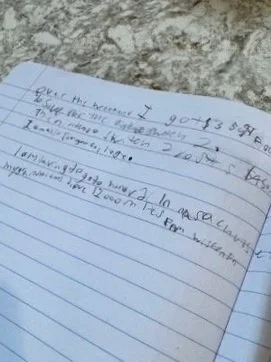
With that context in mind, I had to laugh when my son's third-grade journal came home from school this week. I can promise you I had absolutely nothing to do with this. If you can't read his handwriting (join the club), he proudly informs his teacher that he is saving money so he can "go to Harvard in Massachusetts."

Ambitious? Absolutely. Realistic? Let's just say he's got some time…

BIGGEST COLLEGE-RELATED NEWS OF THE WEEK

THE PUSH TO BRING BACK STANDARDIZED TESTING REQUIREMENTS

Last week, we shared some pretty big news as hundreds of faculty at UC schools signed an open letter requesting that SAT scores become a requirement for admission. The main reason is that faculty in STEM fields are seeing some really poor performance in math in recent years, making it hard to teach more advanced concepts. It looks like officials at UC have listened, as it was just announced by the UC Academic Senate that a committee will be reviewing the issue. Not all faculty are on board with the idea, and a change to standardized testing requirements would still have to be approved by UC’s Board of Regents. But it’s definitely something to keep an eye on if you’ve been considering applying to a UC school. 

And this might be the start of a trend, as Yale just announced that it will once again require SAT or ACT scores starting with the next admissions cycle. Like many colleges around the country, Yale relaxed its requirements for standardized testing during the pandemic, making submission of scores optional. However, after reviewing its admissions policies, the university decided it was time to bring those test scores back. In some ways, it's an attempt to ensure fairness while also making admissions decisions more predictive of academic success. I think Dean Pericles Lewis sums up their perspective well: “SAT and ACT scores are strong predictors of a student’s future Yale academic performance, and, when considered thoughtfully as part of a whole person review, they can help identify well-prepared candidates, especially those from socio-economically disadvantaged backgrounds.” And Yale isn’t alone: Columbia University also just announced that it will once again require SAT or ACT scores for students seeking to enroll for Fall 2028! I suspect a similar thought process at work here. While test-optional policies aren’t going to disappear overnight, it’s pretty clear that there’s a push to bring back standardized testing as an admissions requirement. So if you’re taking your SAT or ACT for the first time, or hoping to improve your score, it’s probably worth putting some extra time into test prep.

AS TOP-SCHOOL PRICES SOAR, SO DOES AID

It’s hardly surprising that costs at some of the most prestigious colleges in the country are now rising above six figures – although it’s still pretty staggering to think that there are now over 16 schools that top a $100,000 price tag! And while most Ivy League schools can get away with those costs, some smaller liberal arts colleges are feeling the competition from state schools as students think more carefully about cost versus return. Is the debt really worth it when job security feels so uncertain? But the same schools with such exorbitant sticker prices are also offering some of the strongest student aid packages. For families earning below the $200k annual threshold, schools like Harvard and Penn offer tuition-free options, and other top colleges on the list offer merit aid for many first-time, full-time students as high as 57%. So don’t write off your ideal school just because of its price tag; sometimes the most expensive colleges end up being the most affordable thanks to generous scholarships and financial aid.

DOJ TARGETING MEDICAL SCHOOL ADMISSIONS … AGAIN

The Justice Department once again has medical school admissions practices under scrutiny, announcing that it’s opening an investigation at 15 more schools over concerns that the institutions could be violating race-based admissions regulations. This comes only a month after the DOJ announced investigations involving Yale and UCLA, although it has yet to name any of the colleges in this recent claim of racial discrimination. Meanwhile, defenders of the admissions practices at med schools worry that the DOJ doesn’t fully understand the criteria for choosing the best potential future physicians.  Alison Whelon, the chief medical officer of the Association of American Medical Colleges, pointed out that “It takes more than test scores to become a good doctor,” arguing that diverse perspectives in the classroom better prepare future doctors to serve diverse populations. Her opinion reflects recent pushback in higher education against the administration's attempts to intervene in the admissions process, as many feel those attempts could be coming from a misunderstanding of the SCOTUS ruling. One thing definitely seems certain: this debate about diversity in admissions practices is not going away anytime soon.

SPELMAN COLLEGE’S NEWEST PRESIDENT

The country’s top-ranked HBCU, Spelman College, just announced the appointment of its next president: Dr. Ayanna Howard. This comes as exciting news as Howard is an incredibly celebrated scholar in the world of robotics and AI. Howard has published extensively and earned more STEM leadership appointments and accolades than we could possibly list (although you can read about them here). What we think is particularly great is her commitment to a very human-focused approach to technology, and one that starts in the university classroom. Spelman is already a national leader in preparing Black women to pursue PhDs in STEM fields, and Howard’s appointment is a perfect fit!

ACCOMMODATIONS REQUESTS DUE AUGUST 3

For our Fairfax County clients, if your student is entering 10th, 11th, or 12th grade and might need disability or multilingual accommodations for taking the PSAT or SAT, you will need to submit a direct request by the August 3 deadline. Make sure to review the request process carefully and complete all required forms. The tests are administered by the College Board itself, so even if your student already has accommodations in the classroom, you’ll still need to go through this process. 

Deadlines will be similar everywhere, so our clients outside FCPS should also make sure to check with their school testing coordinators to find out what needs to be done and when!

BEST ARTICLES OF THE WEEK

One of the greatest joys of visiting a college campus is really just the beauty of the space; many campuses – even some urban ones – are surrounded by gorgeous gardens, plentiful trees, and the incredible architecture of the many study halls and research centers. But what happens to that space when a college closes? As college enrollments have been declining in recent years, some colleges have been forced to shut down, leaving those beautiful campuses empty. Occasionally they get swallowed up by other schools nearby, but the rural Green Mountain College in Vermont, which closed in 2019, is part of another story: private developers. Raj Bhakta, whiskey-maker and former contestant on “The Apprentice,” purchased the 115-acre campus with plans to create a space for faith-based education that would strengthen his idea of American values. And his primary vision? Alcohol (no, I’m not kidding). Skeptical of higher education, Bhakta claims he would like to see young people connecting, instead, over beer. Like area legislators, I have some questions about Bhakta’s plans, and so far, not much has been done with this space. But the issue does speak to concerns about the role college campuses play in local communities as well as questions about what will happen to these spaces if enrollments continue to decline. If your family has been shopping for a sprawling plot of rural land dotted with abandoned classroom buildings and residence halls, maybe this is your market! 

Of course, we know your real dream is to be on a vibrant college campus at a school that is not only open but thriving. But admissions is tough, and while we here at DCCC do everything we can to help your kids get into their top-choice schools, some students are finding other ways to attend the universities of their dreams, even if they aren’t admitted through the traditional route. Many flagship state schools have alternative-enrollment options, such as offering dual-credit through a nearby community college, or allowing students to take online courses rather than sitting in the physical classroom. While these students are missing out on many of the perks of the first-year experience – which can be really important for building a sense of community and having an early support network – they are finding other ways to stay involved in campus culture, like attending tailgating events and joining Greek life. These options can be more affordable, too. Programs like the University of Florida’s Pathway to Campus Enrollment, which requires online schooling before transitioning students to in-person courses, has seen major growth in recent years, even if there are drawbacks like limitations on the courses offered. I can’t say this is a route we would recommend, but I do admire the tenacity of these students who are finding creative ways to make their college dreams happen! 

The shape of those dreams is changing, however, as higher education is going through some major upheavals that point towards a very different future. Schools like Green Mountain, mentioned above, have certainly felt one of those shifts: declines in enrollment leading to complete closures. The effects of the enrollment cliff – a drop in births following the 2008 financial crisis and leading to fewer potential students – are already being felt at smaller regional colleges that simply don’t have enough students to stay afloat. And fewer high school students are convinced of the value of a college degree given an uncertain job market and exorbitant enrollment costs. Plus, A.I. has created a no-win situation for colleges that are simultaneously partnering with A.I. to stay ahead of the tech curve while still struggling to navigate student reliance on LLMs to complete assignments.

Meanwhile, incoming student performance continues to decline, and once-challenging college courses may be replaced by classes that cover what students should have already learned in high school – one of the reasons we’re seeing that increased push to bring back standardized testing as an admissions requirement. Not every change will be negative, at least. Community colleges are likely to benefit as students looking for affordable alternatives pursue associate’s degrees before transitioning to a four-year program. We might also see universities reconsider spending priorities, potentially reducing administrative costs while preserving academic programs and faculty resources. While no one knows exactly how these trends will play out, it's clear that higher education is entering a period of significant change, and colleges and universities need to clarify what they’re offering if they plan to maintain their present price tags. 

OFFICE HAPPENINGS

As high school has finally ended for most of our clients – congrats Class of 26!! – we’re starting to see more kids signing up for meetings. That’s great!! I know you all are looking forward to some well-earned rest (students and families alike), and you certainly deserve it. But it’s important to stay focused on preparing those college application materials. We’re hard at work getting Common App essays polished and also preparing our generic supplemental essays so that we can hit the ground running once colleges start releasing their prompts, with a few having dropped already!

Enjoy the summer sun – and stay hydrated!

check out some of our other sat-related posts:

ChatGPT: Using Generative AI for Success!

Just a couple of years ago, ChatGPT was mostly a fun tool – something you’d use for quick research or to generate silly pictures of your dog in a space suit (don’t worry, your secret’s safe with us). But it didn’t take long for students to start using it for more serious tasks – like writing their English or history essays. That’s where the trouble began.

Last week, we shared that Virginia Tech is now using an AI tool alongside human reviewers to evaluate college essays. Officially, it’s about efficiency – but let’s be real: they’re almost certainly also trying to catch AI-generated writing. And if Virginia Tech is doing it, you can bet other colleges are, too, even if they’re not saying so out loud.

So here’s our message this week: using generative AI to write your college essay isn’t just unethical. It’s risky. It’s detectable. And it’s a missed opportunity to show who you really are.

Still not convinced? Then hear this: you’re going to get caught.

We’ve seen it firsthand. Our essay coach Alan, who also teaches at the University of Maryland, has already flagged dozens of AI-written assignments. In every case, the student either had to start over or received a zero. And admissions officers are even more tuned in. You might think you’re being clever with your prompts – “write like a high school student who’s not great at writing” – but the result always gives itself away.

More importantly, leaning too hard on AI shortcuts robs you of something essential: the chance to think deeply, reflect honestly, and grow as a writer. Studies are already linking ChatGPT use to declines in memory and critical thinking – and let’s face it, nobody wants their essay to be called “soulless.”

We’re not here to bash ChatGPT, though. It’s an amazing tool when used the right way. So let’s break down when it helps, and when it really, really doesn’t.

THE BAD

Losing Your Voice

This might sound obvious – don’t have ChatGPT do your homework – but it’s worth unpacking. There are plenty of reasons why asking AI to write your essay is a bad move, whether it’s for school or college applications. The biggest one? It’s incredibly easy to spot when something wasn’t written by a student.

You might try to be clever by giving ChatGPT specific style prompts, but the results always include giveaways – certain phrases, word choices, or patterns that teachers, professors, and yes, your essay coaches, will recognize immediately. With college essays especially, your voice is everything. Schools aren’t just reviewing what you say – they’re listening to how you say it. And if the tone feels off or overly polished, it raises red flags.

That’s why our essay process is built around preserving your unique voice. We’ll help you polish your drafts, but we won’t rewrite you. Your structure, your examples, your phrasing – these are what help your personality and perspective shine.

Impairing Your Memory and Grades

Here’s something you might not expect: studies show that over-reliance on tools like ChatGPT can impair memory and lead to a decline in your grades. That’s because if you didn’t write it, you probably won’t remember it. And in school, that matters.

Teachers often design assignments to build on one another. So if you submit AI-generated work early on, you may find yourself lost when later assignments rely on what you supposedly “wrote.” Plus, once you start leaning on AI because you’re short on time, it can become a habit – and that leads to even more procrastination and weaker performance on things you can’t outsource, like in-class writing or timed exams.

At DCCC, we can see this in how it hurts our progress with students. If you don’t remember what’s in your own essay – because you didn’t actually write it – it’s tough to adapt it for other schools or supplementals. That slows us down, and it makes your application less compelling.

Sounding Like a Robot

Let’s say you wrote a draft on your own but didn’t love how it sounded. You plug it into ChatGPT and ask it to make it better. That seems okay – you wrote the original, right?

The problem is that ChatGPT doesn’t make light edits. It rewrites everything. The version it gives back might sound cleaner, but it also tends to sound flat, like a grammar textbook wrote your essay. It strips out the small quirks and “realness” that make your writing yours. Creativity and personal expression matter just as much as accurate grammar, especially in essays meant to show who you are.

Doing All Your Research in One Place

By now, ChatGPT may feel more helpful than Google when you’re looking for quick info. But unlike even Wikipedia, there’s no human vetting what it says. It pulls content from popular sources (accurate or not) and often presents it with authority.

That means if you rely on it for college research or academic facts, you could easily get outdated or misleading information. And when it comes to writing college essays, that’s a real problem. We’re not saying don’t use ChatGPT to help start your research – but if you don’t verify what it gives you, you’re asking for trouble.

That’s not to say you can’t use generative AI to support your research – you can. But there’s a right way to do it, and I’ll share that below!

THE GOOD

A Head Start on Your Research

Generative AI tools like ChatGPT can be a great way to get your bearings on a topic, especially when you're not sure where to begin. Want to explore colleges with strong programs in marine biology? Need a few themes to unpack in that obscure art film for your “Intro to Cinema” class? ChatGPT can help you gather some early ideas, summarize key points, and generate lists that can jumpstart your process.

But – and this is important – the information isn’t always accurate or current. ChatGPT can pull from outdated sources, miss school-specific details, or rely on oversimplified explanations. If you’re researching campus traditions or program offerings, for example, you might get answers that are no longer true. Plus, AI can’t access most scholarly sources or anything behind a paywall, which means you’re often missing out on the most recent or credible research.

So use ChatGPT to get started – then dig deeper. Check official websites, use databases for academic work, and always fact-check anything you plan to include in your writing.

Checking Your Grammar the Smart Way

Not sure whether you’ve used a semicolon correctly? Wondering if that sentence sounds too clunky? This is where ChatGPT and tools like Grammarly shine. You can drop in a sentence or two and ask for quick feedback. You can even prompt it to give you a list of suggestions.

But here's the line to watch: don’t ask ChatGPT to revise entire sentences or paragraphs, or worse, to rewrite your essay. It will almost always go too far, making big changes that strip out your tone and voice. It’s great for suggesting issues you can change yourself, but the more you let it alter your words, the more generic and robotic your writing will feel – especially to someone trained to spot it!

Bottom line: use AI to clean up the small stuff. But when it comes to tone and flow, trust yourself – and your coach.

Getting Unstuck

We’ve all had those moments when a word is right on the tip of your tongue or you’re searching for a new angle but hitting a wall. That’s where ChatGPT can really help.

You can try prompts like:
“What’s a word that means someone who’s driven and determined, but sounds kind of like ‘suspicious’ and maybe starts with an ‘a’?”
Answer: ambitious. Nailed it!

Or, let’s say you need help developing a supplemental essay idea. Try something like:
“I worked as a camp counselor this summer and dealt with some difficult middle schoolers. I want to write about it for a personal growth essay – any ideas for a theme?”

ChatGPT might suggest words like resilience, patience, or leadership, along with possible moments you could explore. That’s a win. Of course, you can’t just borrow its examples and pass them off as your own – don’t even go there – but it can help spark ideas that are true to your story. Think back to your actual experience and ask yourself: “Do I have a different understanding of leadership? Were there moments when I was incredibly resilient under pressure?” 

So if you’re stuck, don’t panic. Use ChatGPT as a brainstorming buddy, then reflect honestly and write from your own experience!

ChatGPT and other generative AI tools aren’t going anywhere – and that’s not a bad thing. Used well, they can be incredibly helpful.

But what we need now is a deeper understanding of when and how it is appropriate to use these tools – and when we need to trust ourselves more as writers. As high school teachers and college professors rush to figure out how to integrate these tools into their classes and teach best practices to their students, we here at DCCC want to remind everyone that it’s never a good idea to ask ChatGPT to write your college essays for you.

Plus, our coaches are pretty amazing at what they do – so trust the process! Use ChatGPT to help come up with some ideas or make some corrections to specific grammar issues, and remember that no matter how bad of a writer you think you are, your honest writing will always sound better than a robot!

Check Out Some More of our Summer 2025 Special Topics Below!


AI, Authenticity, and Mission Fit: Understanding Virginia Tech’s New Admissions Move

Virginia Tech just rolled out a major update to how it reviews applications – and every rising senior should be paying attention. The university has framed these changes as a response to rising application volume and a push for faster turnaround times, and that’s likely true. But in our view, there’s almost certainly more happening beneath the surface.

A Quick Note on Deadlines

First, a quick logistical update: Virginia Tech has bumped its Early Action deadline up from November 15 to November 1. That’s worth noting, but it’s not the headline here. If you’re applying, just be sure to adjust your timeline accordingly.

Note that Virginia Tech also has a materials deadline of December 1.

What’s Actually Changing: Human + AI Essay Review

Starting this fall, every essay submitted to Virginia Tech will be reviewed by both a human admissions officer and an AI tool built by the university’s own researchers. If the two scores are close, that’s it – the essay moves forward. If the scores are more than two points apart on a 12-point scale, a second human reviewer steps in.

It sounds straightforward, and from a logistics standpoint, it is. Virginia Tech received more than 57,000 applications last cycle, and this new process helps them move more quickly without sacrificing fairness or a standardized approach.

Why This Matters (and Why It’s likely Bigger Than They’re Letting On)

In my opinion, there are an additional two significant, unspoken reasons why Virginia Tech has turned to AI for essay review:

1. They want to detect AI-written essays.

I’ll be honest: this has become a huge problem in our work with students. About a year ago during a Meet & Greet, a parent asked whether many of our students were turning to AI to help with their essays. At the time, my answer was a clear no – it just wasn’t something we were seeing.

What a difference a year makes! Since then, we’ve seen a sharp uptick in students experimenting with AI tools to “draft” their college essay work between their meetings with our essay coaches. For some, it’s turned into a bit of a cat-and-mouse game – they try to pass off AI-generated content, and we step in to explain why that’s not just inappropriate, but extremely harmful to their chances of admission. And we’re catching it. When something feels off, we pause, ask hard questions, and help the student re-draft. It takes time, and yes, it can be frustrating – but the alternative is far worse.

So, while Virginia Tech hasn’t officially said that its new AI-assisted review system is meant to detect AI-generated essays, we’re almost certain that’s exactly what it’s doing. They’ve created a process that quietly flags essays that don’t feel quite right – and we know other colleges are doing the same, even if they’re not saying so publicly.

2. They want essays that reflect Virginia Tech’s mission and values.

Since Juan Espinoza’s leadership began approximately eight years ago, Virginia Tech has shown time and time again that they care deeply about mission fit. And they’ve been very clear about what that mission is! Guided by their motto Ut Prosim (That I May Serve), Virginia Tech describes itself as “an inclusive community of knowledge, discovery, and creativity dedicated to improving the quality of life and the human condition” – both in Virginia and around the world.

They really live this out. You can feel the ethos in their supplemental prompts, which ask students to reflect on service, curiosity, impact, and community. So, our guess is that this AI model was trained to evaluate how well a student’s essay speaks to those values – not just in what they say, but in how they say it. Does the writing reflect a sense of purpose? A desire to contribute? A curiosity about the world and a willingness to serve others? Do the examples and anecdotes sound like a 17-year-old wrote them?

In other words, authenticity matters A LOT for Virginia Tech!

So, What Should Students Do?

Nothing different, if they are already writing their own essays, being thoughtful about their responses, and avoiding AI shortcuts. This new system only reinforces what we already teach: essays should be authentic, specific, and rooted in the student’s voice.

For that reason, I don’t mind this change. It gives students who are playing by the rules an edge. Because while some applicants will get flagged for using AI, and others might turn in essays that feel detached or surface-level, students who’ve taken the time to write with purpose will stand out even more.

Final Thoughts

Virginia Tech is the first college we’ve seen openly announce the use of AI in its essay review process – but we’d be shocked if they’re the only ones. Other schools are almost certainly using similar tools behind the scenes without public recognition of it. That’s why it’s more important than ever for students to stay grounded in their own voice.

If you’re guiding your student from the dining room table, here are a few steps to help keep things on track:

  • Stick with a structured outline and encourage real-time drafting. Try not to skip straight from brainstorm to final draft.

  • Use Google Docs and enable Revision History to ensure the process stays transparent – it’s a great way to see how writing evolves. If your student is copying and pasting large amounts of text, that’s a big sign that something is not right.

  • If something feels “off” in tone – too polished, too generic, or just not like your child – that’s a sign to pause. Go back to the outline and have your student write with you present.

  • Check drafts with multiple AI detection tools. They’re not perfect, but if one of them flags the writing and it doesn’t feel authentic, don’t take the risk.

We’ve heard from some parents who assume it’s fine to let ChatGPT write from a student-created outline, believing that the end result will “sound human” and pass through unnoticed. But colleges and their tools are getting sharper! What may have worked quietly last year will likely carry serious consequences this fall, including automatic application denial in addition to contact with the student’s high school about a potential academic integrity violation.

So, you don’t need to be an English teacher or tech expert. Just be present, ask questions, and help your student reflect on what they want to say/how they want to say it.

And of course, if you want backup, we’re always here!

Weekly Update: February 21

Welcome back to reality after the long weekend!

BIGGEST COLLEGE-RELATED NEWS OF THE WEEK

U.S. SUPREME COURT UPHOLDS NEW TJHSST ADMISSIONS PROCESS

In a somewhat surprising decision yesterday, the U.S. Supreme Court chose to uphold a prior court’s decision and will not hear the case alleging that the new TJ admissions process is unconstitutional. Instead of the former process, which was based primarily on test scores and grades, the new process involves a holistic approach that will ultimately have a major impact on geographic and socioeconomic factors. It was modified specifically in order to ensure larger representation from under-represented groups, and has resulted in exactly that - the Asian-American student population has dropped sharply as a result.

Most spots are now spread equally among every single middle school in the county, ensuring admission for the top 1.5% of each school’s students — regardless of that school’s quality or where those students stand in the overall applicant pool. All students who do not fall in the top 1.5% of their class will be able to apply for the small percentage of remaining spots, but preference for those will be given to students who receive special education services, are low-income, attend traditionally lower-performing schools, or are not native English speakers.

In a dissent with which Justice Thomas agreed, Justice Alito explained that he believes the new process is discriminatory and represents “a grave injustice on diligent young people who yearn to make a better future for themselves, their families, and our society.” Check out pages 30-39 of the document, if you can find it - the version I had went down at some point late last night, but I’m linking to it anyway in case it comes back up.

THE COLLEGE BOARD AGREES TO PAY FINES OVER SELLING NEW YORK STUDENTS’ DATA

The attorney general of New York, Letitia James, accused the College Board of selling private student data including “students’ names, contact information, ethnicities, grade point averages and test scores” to more than 1,000 colleges and scholarship programs. In 2014, New York State Education Law 2-D barred the commercialization of such information. Between 2018 and 2022, however, the College Board made millions of dollars licensing this information. Though the College Board still maintains that there was no improper use of the information, they did agree to pay $750,000 to settle the claims.

UPENN FIRST IVY TO OFFER B.S.E. IN ARTIFICIAL INTELLIGENCE

There has been a lot of attention on Artificial Intelligence (AI) in and around schools since the release of ChatGPT and other generative AI sites and tools, much of it negative. Questions such as “How do we stop students from using it?”, “How can we detect if students are cheating?”, and “What constitutes plagiarism for students or even faculty now?” have been asked and discussed in faculty rooms, classrooms, and online. Most Artificial Intelligence degrees are housed in computer science departments. At the University of Pennsylvania, however, the Penn School of Engineering and Applied Science has turned the questions on their head. Penn has now become the first Ivy League university to offer a degree in AI engineering, as Philadelphia’s Channel 6 ABC affiliate reports.

SURVEY BY THE YALE DAILY NEWS INDICATES CORRELATION BETWEEN STUDENTS ON FINANCIAL AID AND STANDARDIZED TEST SCORES

New research points to a link between students who need full or significant financial aid to attend college and their likelihood to take and submit SAT/ACT scores. The Yale Daily News undertook its own survey of current undergraduates at Yale and found “that Yale College students receiving financial aid are less likely to have included an ACT or SAT score in their Yale applications than students not on aid.” This finding corroborates the research from Opportunity Insights released in January 2024, which studied the relationship between standardized test scores and students’ academic success at Ivy-Plus colleges. This research comes as Dartmouth recently announced the decision to reinstate its policy to require test scores, and Harvard committed to a test-optional policy through its Class of 2030. Yale is completing its internal research with a decision expected by the end of February.

BOWDOIN AND GEORGETOWN CONTINUE TO BE FULBRIGHT POWERHOUSES

The Chronicle of Higher Ed reported on schools that produced the most Fulbright Scholars and Students. This incredible opportunity to study and live abroad comes with steep competition, yet Bowdoin College in Maine has been the top producer of Fulbright U.S. Students among baccalaureate schools for four years running! This year, according to the Fulbright Program, 47 Bowdoin students applied and 23 received grants. Oberlin in Ohio and Pomona in California were not far behind. Georgetown University has been the top producer of Fulbright U.S. Students among doctoral universities four out of the last five years (in 2021-2022 Brown University was number one) with 40 students receiving grants. Brown University (RI) and Harvard University (MA) were the next closest schools. 

BEST ARTICLES OF THE WEEK

As more and more small, tuition-driven colleges and universities struggle with a death spiral of rising costs and falling enrollments, many have had to get creative to keep their doors open. Some schools have begun to monetize at least one asset whose value has risen even in today’s tough environment: real estate. A recent New York Times article writes about colleges that are selling property to raise funds. The article leads with the New School in New York City, which is selling their five-story West Village townhouse that serves as the official residence of the school’s president — currently, that’s Interim President Donna Shalala, a former U.S. Secretary of Health and Human Services who also served as the University of Miami President for nearly fifteen years.

And speaking of real estate — it’s not all just being sold. Large, expensive, and tricked-out student housing complexes are popping up across the country. The New York Times reports on the trend and the developer bringing these projects to life in 23 states. Students benefit from numerous in-dorm amenities such as fitness centers and pools, and can even take advantage of apps to match themselves with roommates. But the properties are not university residence halls, which can be good or bad depending on your perspective. It might be better than the sketchy off-campus apartments many parents will remember from the 1990s and early 2000s, but these apartments aren’t cheap, either — Hub on Campus Blacksburg, near Virginia Tech, lists monthly rental rates between about $900 and $1,800 per person depending on suite size, according to Apartments.com. Bigger may be better from the developers’ perspectives right now, but it’s hard to know how it will look for students down the road. 

In more local news, check out Washingtonian’s coverage of the Georgetown University consulting club challenges. Over the last 10+ years, these student-run organizations at Georgetown and peer schools have become quite popular, with demand to participate far exceeding the number of student slots. Most of these organizations offer local companies and nonprofits the benefits of their consulting work, usually pro bono or for a nominal fee, and students are able to gain relevant experience that looks great on their resumes. However, many students (particularly first-generation, low-income, LGBTQ+ students, and those of color) felt excluded by the competition to be accepted into one of Georgetown’s six groups. As a result, a student advisory board implemented new guidelines in August of 2023 that required all clubs to open their membership. This has created a huge problem from the organizations, which have now grown from 60 to 300+ students overnight.

As the FAFSA redesign and implementation continues to be a concern, USA Today detailed one potential change that could alleviate student and family confusion over financial aid awards: standardization. When trying to compare financial aid offers from multiple schools, students and families can struggle to make sense of which aid is school-specific aid, federal aid, or self-help aid in the form of work-study and loans. A standardized format would help families understand exactly how much of the total cost of attendance they are expected to contribute and how much will be covered by each form of aid.

In response to the U.S. Department of Education’s delays in processing the FAFSA and transmitting the information to colleges and universities, many schools have extended their deadlines by which students will need to make their decision and submit a deposit where they intend to matriculate. The Washington Post recently published an article that lists all of the area colleges and universities (those in Maryland, the District of Columbia, and Virginia), the school’s deadline to respond, and whether that deadline has been extended. According to the Post, the list will be updated when and if any schools announce changes to their deadlines. For a list of schools across the country, the American Council on Education is maintaining a searchable list.

Finally, in this piece in The Athletic, Brendan Quinn takes readers inside BYU’s Men’s basketball program as they make the transition into the Big 12 and a new world of high-stakes college sports. BYU Advancement Vice President Keith Vorkink (who oversees athletics) and Head Coach Mark Pope know that navigating this transition into the best basketball conference in N.C.A.A. Division I Basketball is no easy feat. Balancing the school’s mission and culture with the demands of DI recruiting, new rules about name, image and likeness opportunities, and the transfer portal creates a tension, but Pope’s commitment to his mission, his profession, and, most important, his players is remarkable. This article takes readers into the recruiting and gives a glimpse of the unique support Pope provides his players.

OFFICE HAPPENINGS

Yesterday got a little crazy after the TJ decision broke! We work with a lot of TJ students (as well as a lot of TJ hopefuls in middle school) and I know this is a sensitive topic for many. I have a child in the FCPS system and we are zoned to Cooper Middle School, one of the schools that will likely continue to experience a significant negative impact as a result of the ruling.

Yet after seeing what I have over the last 15-ish years of working with TJ kids, I don’t think I would want either one of my kids to go to TJ, whether they could get in or not. Many of our TJ families complain about a culture they feel is toxic, and the funny thing is that it doesn’t seem to pay off from an outcomes standpoint. TJ applicants often perform worse in the college admissions process than their similarly-achieving peers at other schools because of the extraordinary amount of internal competition.

On a happier note, I am going to hold myself back on sharing details because of privacy reasons, but I just have to brag for a minute that our seniors are absolutely killing it on their ED II decisions. We have kids going to an absolutely phenomenal array of highly selective schools and this past week has involved one piece of good news after the other. I am so incredibly proud of them!

Once again, early decision programs are the way to go if students don’t need to compare scholarship offers and want to end up at highly selective schools. Students who follow our advice on this consistently achieve significantly better outcomes than their peers who decide they don’t want to apply ED. I love ED II, in particular, because it allows students to shoot for a dream reach ED and then a more manageable reach in the second round.

CATCH UP ON OUR WEEKLY BLOGS BELOW!

Weekly Update: December 19

As we head into the final weeks of December, emotions are running wild as our students have been learning their early application results! We’ve been anxious too!

BIGGEST COLLEGE-RELATED NEWS OF THE WEEK

LEGACY ADMISSIONS – NOT JUST FOR THE MOST SELECTIVE SCHOOLS

The U.S. Department of Education released data this week on the number of colleges that give preference to applicants with legacy status. A new push to eliminate legacy admissions emerged after the Supreme Court’s decision on colleges’ use of race in admissions decisions this past June. In the 2022-2023 academic year, under 600 colleges and universities consider legacy status while making admissions decisions, with approximately two-thirds of those schools accepting more than 50 percent of applicants.

UVA ANNOUNCES EXPANSION OF ACCESSUVA PROGRAM

UVA’s president announced the decision of the Board of Visitors to expand AccessUVA, the financial aid program to benefit more low- and middle-income students and families. The program was started in 2004 as a way to attract more applicants from diverse backgrounds. Students from families with incomes of $50,000 or less (previously $30,000 or less) will receive grants and scholarships to cover the cost of tuition, fees, room, and board. Families whose incomes are $100,000 or less will receive grant or scholarship aid equal to tuition and fees or more. And finally, families with annual incomes below $150,000 (an income increase from $125,000/year) will receive a minimum of $2,000 in grants. Additionally, UVA has set caps on the total students can borrow within each income bracket, both annually and cumulatively over their four undergraduate years at UVA.

VIRGINIA SENATOR TAKES THE LEAD IN REQUESTING FAFSA CLARIFICATION

Senator Tim Kaine (D-VA) is part of a group of U.S. senators asking the Department of Education to provide “clear guidance and communication” regarding the implementation of the new FAFSA to students and their families. The Department of Education has announced that the FAFSA will be available by December 31, 2023, but the senators are asking for “an actual date.” Recent articles have suggested that once the new FAFSA is launched, there will be further delays in the time needed before the information will be sent to colleges and universities. This comes on the heels of the FAFSA calculation problems we discussed last week.

HARVARD UNIVERSITY PRESIDENT BACKED BY BOARD

Fallout continues following the testimony of Harvard University President Claudine Gay before a U.S. House of Representatives hearing regarding increased incidents of antisemitism on campus. While there was a public cry for her resignation, both the Board of Overseers and the hundreds of faculty supported President Gay in continuing in her role. Since giving her testimony, President Gay has apologized for and clarified her remarks.

STUDENTS ARRESTED IN SIT-IN AT BROWN UNIVERSITY

At a sit-in at Brown University’s University Hall, 41 students were arrested and charged with trespassing. The action was organized by Brown Divest Coalition, a student group demanding that the university divest from companies that produce weapons and support a ceasefire in Gaza. More than two hundred additional students protesting outside the building on the Green were not arrested.

FCPS ANNOUNCES PLANNED OPIOID AWARENESS EVENT IN JANUARY

Earlier this year, Cayden Foster, a Centreville High School student, died from a fentanyl overdose. His parents have asked Dr. Michelle Reid, FCPS Superintendent, to share their story as part of a community conversation about opioid awareness. Please watch their story and join Dr. Reid at Edison High School at 6:30 p.m. on January 10 for this important conversation about opioid and drug use in Northern Virginia and Fairfax County. You can register using this link, though it is not required to register in advance. For more information and resources, visit FCPS’s website.

BEST ARTICLES OF THE WEEK

A year ago, the media was focused on the impact that ChatGPT and AI tools were going to have on the college essay and supplements. Now recent research from Stanford University shows that the hype and attention may have been over the top. The research analyzed surveys from over 40 high schools and found that 60 to 70 percent of students reported that they had recently cheated – about the same number as compared to last year, prior to ChatGPT. Pew Research Center surveyed over 1,400 adolescents in the U.S. and found that 32 percent reported having heard “nothing at all” about ChatGPT and another 44 percent had only heard “a little.” What we know from our essay work is that students who answer the prompt with highly specific, personal examples fare better in the admissions process!

Entrepreneur and Texas resident Elon Musk may try his hand at education. Reportedly, one of his charities’ tax filings indicates plans to use a $100 million gift from Musk to open a K through 12 school focused on STEM education. Once the school is operational, they will create a university to educate students in person and use technology to offer distance learning.

We mentioned two weeks ago that students might be avoiding Ivy League schools as a result of the anti-Semitism that has been rampant on their campuses since October 7. It turns out that we were on to something, because early applications to Harvard were down by 17%. And that’s not all - word on the street is that a lot of admitted Harvard students are, in fact, turning elsewhere - a theme emphasized in this New York Post article. Remember, Harvard has a restrictive early action program, so applicants are not obligated to enroll. Like I mentioned before, I think we will be seeing the consequences of this for a while.

OFFICE HAPPENINGS

The level of stress we feel at this time of year can be pretty intense. Most people have one kid to worry about, but we have about forty! Whether we’ve been working with a student since seventh grade or just for a few months, we hold their hands every step of the way and become very emotionally invested in the outcomes.

We had a lot of good news - more than I was expecting given the circumstances relating to the Supreme Court ruling and all of the uncertainty associated with it - but some disappointing decisions too. And at the end of the day, I really believe that the kids who consistently work hard and make smart decisions will end up somewhere great. They don’t always get into their absolute top choice, but it will still be a happy outcome - it always is.

And with all of that behind us, we’re taking a much-deserved break! Some of us are working reduced hours this week, and then our office will be fully closed from Friday, December 22 through Monday, January 1.

We will reopen on Tuesday, January 2. We wish everyone a safe, healthy, and restful winter break and a Happy New Year!

Interested in other Weekly Updates? Check out these recent posts!

Weekly Update: January 3

BIGGEST COLLEGE-RELATED NEWS OF THE WEEK

COLLEGES BAN TIKTOK

Some college students are in for a big surprise when they return to campus after winter break. One of the world’s most popular social media apps will now be off limits at some US colleges and universities. Several schools in Georgia, Alabama, and Oklahoma have recently blocked TikTok from campus computers and networks in response to state executive orders, which banned the app on state-issued devices. Growing cybersecurity concerns have also prompted many schools to delete their university-administered TikTok accounts in favor of other platforms. Students are vowing that the bans won’t stop them from using the popular platform, though. There’s a convenient workaround: they can still access TikTok from the comforts of their personal devices and phone plans. 

PROSECUTORS REQUEST SIX YEAR SENTENCE FOR VARSITY BLUES MASTERMIND

Last Wednesday prosecutors filed a sentencing memorandum, asking that William Singer- the “mastermind” behind the Varsity Blues scandal- serve six years in prison and pay over $10 million in restitution. This request is in stark contrast to what Singer’s attorneys have proposed: community service and three years of probation. So why the disparity? Prosecutors claim that Singer’s fraud was “staggering in scope” and “breathtaking in its audacity and the levels of deception it involved.” Singer responded by issuing a statement of apology and remorse to the court. We will continue to track this story, as Singer is scheduled to be sentenced on January 4. 

IDAHO PROFESSOR FIGHTS BACK AGAINST TIKTOK MURDER ALLEGATIONS

TikToker Ashley Guillard made headlines this past week for her psychic attempts to solve the University of Idaho murder case. Guillard, a tarot card reader, created over 40 posts on her social media platform implicating Idaho professor Rebecca Scofield in the tragedy. Professor Scofield’s attorney issued two cease and desist letters before filing a lawsuit for defamation. Guillard doesn’t seem worried, though, about the lawsuit. According to reports, Guillard said she’s “gleaming with excitement” at the chance to share her ideas in court.

IDAHO MURDER SUSPECT ARRESTED

On Friday, officials arrested a suspect in the University of Idaho quadruple homicide case. Bryan Kohberger was apprehended in Pennsylvania, after officials confirmed his DNA was a match to evidence found at the scene of the crimes.

NATIONAL MERIT AWARDS GO UNRECOGNIZED AT TOP VIRGINIA HIGH SCHOOL

There’s a “war on merit” at Fairfax County’s Thomas Jefferson High School (more widely known in our area as TJ). The school has been accused of failing to notify or recognize students named as Commended Students by the National Merit Scholarship Corporation. As a result, nearly 1,200 students missed the chance to bolster their college applications with this honor. Many parents are calling this a “criminal act” and are insisting that the school take responsibility. According to a recently released statement, Fairfax County Public Schools is “looking into the matter” and will correct the notification process going forward.

CAUSE OF PRINCETON STUDENT’S DEATH REVEALED

For months, many have speculated about the cause of a Princeton University student’s death. In October, the body of Misrach Ewunetie was found near campus tennis courts, just two days after Ewunetie was reported missing. Although there were no indicators of foul play, many wondered what happened and why. This past week investigators revealed that Ewunetie died by suicide: a fatal mixture of antidepressants and anxiety medication. 

BEST ARTICLES OF THE WEEK

$60,000 college tuition price tags, tens of thousands in student loans, raging debt: how did we get here? That’s the question David Love is posing, as he traces the history of the American student loan crisis. He examines the shift from college education being perceived as a “public good” to an individual “private endeavor.” Love also looks at the politics and policies that have informed access to college education over the past forty years, making it a luxury for those who can afford the soaring costs. Ultimately, Love calls for an ideological shift back to college as a public good “rather than a profit center.”

Teachers got an unwanted holiday gift this year: a new technology that makes cheating even easier for students. ChatGPT is a newly released AI bot that provides well-written, almost “human-like” answers to any question the user may pose. While this may be a handy app for the curious, it’s anything but for teachers and professors who are concerned about academic integrity. Gone are the days of checking for plagiarism via a Google search. Many educators are worried that ChatGPT will make it impossible to determine originality in student work. And with ChatGPT’s refined features, which include the ability to script paragraphs in different writing tones, teachers will have to work extra hard to distinguish a student’s authentic writing style from an AI response. ChatGPT is aware of the potential for cheating and has offered teachers advice: educate students about cheating; provide them with support so they won’t cheat; and change up typical essay or exam questions to make them more sophisticated. We’re not convinced that these measures will solve the potential problems of AI and cheating. But students beware: your teachers know about this technology, and they’re on the watch! 

A recent New York Times opinion piece delves into a topic that comes up quite frequently in our office: whether or not to disclose mental health issues in college applications. As the author found, this type of disclosure can be a red flag to admissions officers and can have a significant negative impact on admissions decisions. All things being equal, we do not recommend disclosing. However, sometimes all things are not equal - if it’s obvious from other aspects of a student’s application that something serious was going on, it can be better to go with the truth instead of leaving admissions officers to make guesses that are often times worse than the reality.

OFFICE HAPPENINGS

It’s a new year, and we have a new collection of Summer 2023 opportunities for high schoolers! Visit our database to see the latest internships, pre-college programs, and volunteer experiences available. And don’t delay! There are several opportunities with January application deadlines.

If you need help with summer program applications, resumes, or cover letters, book a session with us. Meeting times in January are filling up fast!