Grading

Weekly Update: May 31

The very wet Memorial Day weekend is behind us and summer has officially arrived! While many students are looking forward to vacations, camps, and a well-earned break, the world of higher education certainly isn't slowing down. There have been several interesting developments over the past couple of weeks that could have implications for colleges and applicants alike.

BIGGEST COLLEGE-RELATED NEWS OF THE WEEK

DOJ VS YALE

The Department of Justice continues to scrutinize how colleges and universities make admissions decisions following the Supreme Court's 2023 ruling on affirmative action. Most recently, the DOJ concluded that Yale School of Medicine discriminated against White and Asian applicants in its admissions process. Yale disputes the findings and maintains that its admissions practices comply with the law. Regardless of where this particular case ultimately lands, it serves as a useful reminder that admissions decisions are rarely based on grades and test scores alone. Colleges and graduate schools continue to evaluate applicants holistically, considering factors such as coursework, essays, recommendations, experiences, and personal qualities alongside academic achievement. For students and families, the takeaway remains the same: strong academics matter, but they are only one part of a successful application.

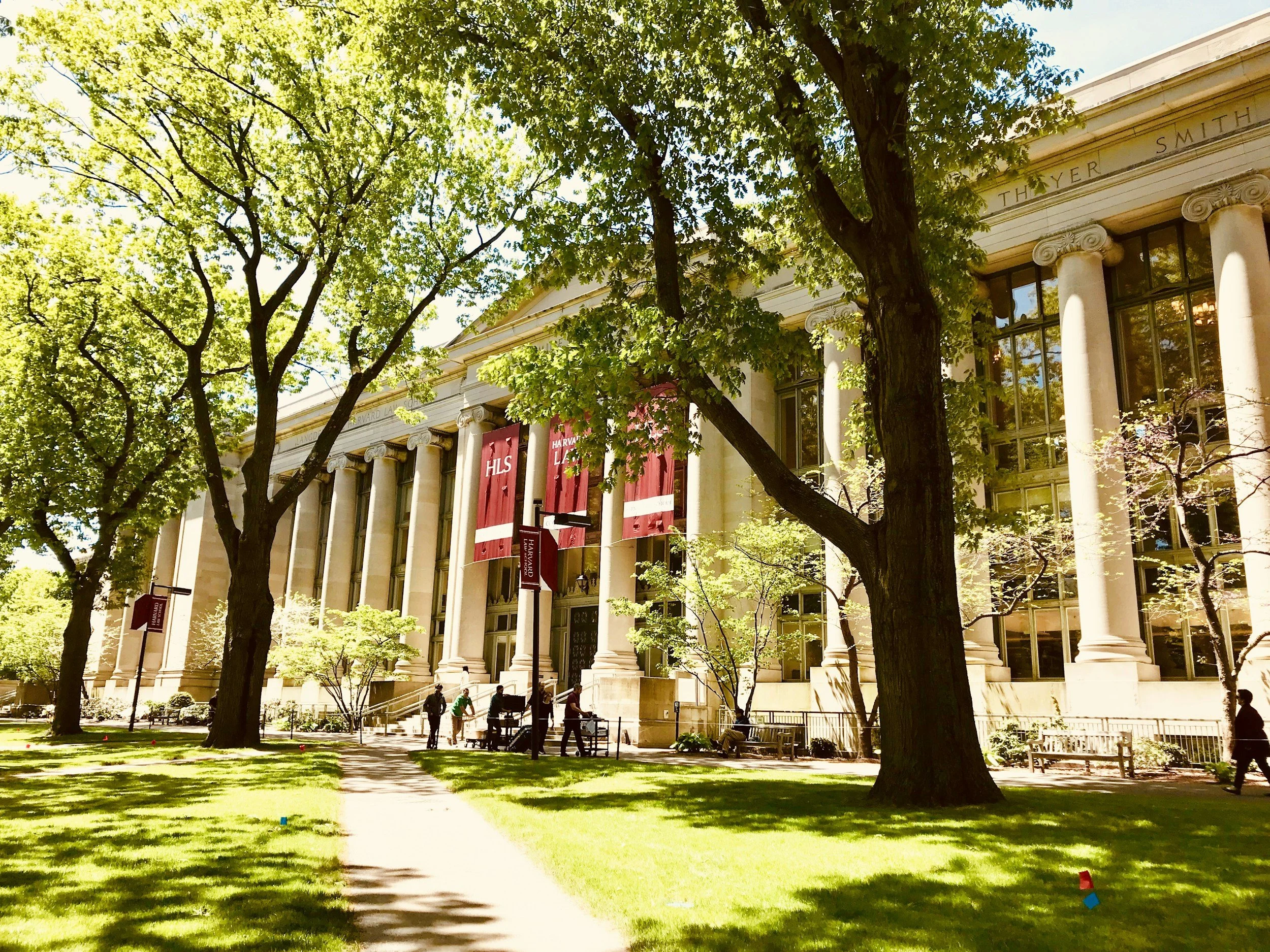
HARVARD TAKES ON GRADE INFLATION

As a major upset to many Harvard students – but a major win to most of its faculty – Harvard passed a resolution designed to curb grade inflation with a 20% cap on A grades! Starting in 2027, only around ⅕ of students in a class can receive an A, a decision made to “help distinguish exceptional work from merely strong performance.” Of course, students were strongly opposed to the initial proposal, and some professors worried it would put too many constraints on their evaluation practices. Nevertheless, nearly 70% of faculty ultimately agreed to move forward with the proposal. At a school with a reputation like Harvard’s, this does make some sense, although we sympathize with an incoming class now worried about GPAs. But the second part of the proposal should offer some comfort: many rewards and honors will be based on percentile rankings rather than letter grades. A major takeaway is that other schools might see this as an opportunity to start revising their own grading practices, so future students should consider early how they will try to stand out in their classes. 
NAACP ENCOURAGES ATHLETES TO GO ‘OUT OF BOUNDS’

The Supreme Court’s recent ruling on voting rights may have consequences in higher education, at least in the Southern states that are likely to be the most impacted. The NAACP has launched a campaign, “Out of Bounds,” that asks Black athletes and fans of collegiate sports to limit financial support at public universities in states that have actively moved to dismantle Black political representation. The NAACP argues that some states benefit significantly from the contributions of Black student-athletes while simultaneously advancing policies that it believes reduce Black political representation. The campaign encourages Black student-athletes to consider the political climate of a state when choosing where to enroll and to use their platforms to advocate for issues they care about.

SEXUAL ASSAULT AT UC SANTA BARBARA

Unfortunately, campus safety remains an important topic for students and families as they evaluate colleges; on May 9th, a UC Santa Barbara first-year student was sexually assaulted in campus housing. The student, identified here as “Jane Doe,” met the perpetrator at a fraternity party and was assaulted shortly after at the Tropicana Gardens student housing apartments. Unfortunately, the perpetrator remains at large. While UCSB Chancellor Dennis Assanis assures the community that the university is taking all the right steps in the matter, many students feel differently and are using social media to encourage “community members to email Assanis and demand that he speak to the survivor’s family and attorney.” They’ve also referenced criticism of Assanis’s handling of another sexual assault case when he served as President of the University of Delaware. While this is a very delicate issue, it is certainly not unique to UCSB or UD; we encourage prospective students to investigate campus safety resources, emergency procedures, transportation options, and support services when evaluating all colleges.

BEST ARTICLES OF THE WEEK

For many students hoping to study medicine, it’s definitely worth considering the pros and cons of the nurse practitioner route. According to the Wall Street Journal, the job market for nurse practitioners is booming! The primary reason is that there just aren’t enough medical doctors to deal with patients seeking mostly basic and routine care, like prescription management and treatment of colds and flus – and NPs don’t cost nearly as much as MDs. For prospective students of medicine, becoming an NP also has many benefits, ranging from shorter degree programs (often just two years) to significantly fewer student loans. So while the salary may be less than that of a primary care physician, a nurse practitioner can still earn around $132k annually while having more free time and far less debt.

But physicians warn that leaning too heavily on nurse practitioners is risky business – without physician oversight, NPs risk overlooking symptoms of more severe problems that they might assume are simply sore throats, and hospitals note that nurse practitioners are often requesting more tests than physicians, which can drive up costs. And many doctors argue that patients would prefer to meet an actual physician in an exam room. But Benjamin McMichael, a University of Alabama economist who found that most people head to the hospital for fairly routine reasons, makes a great point: “a lot of people never get to that exam room.” The real takeaway here is that there are many paths to success in the medical field, and it's worth considering whether your passion is for specialized medical treatment or general care, as well as the associated costs.

Whatever path you choose, at least one Amherst College professor thinks your college education should be… fun? Describing a boisterous and active classroom discussion of a 19th-century novel, Professor Michael A. Elliot argues in The Atlantic the need for more engaging and playful experiences in college courses – a perspective shared by our own DCCC essay coach and University of Maryland Senior Lecturer, Dr. Alan Montroso! The classroom is a space for meaningful conversation and engagement with complex ideas; critical thinking develops best when the mind is actively engaged. But the humanities, where this kind of education is most often found, are also in decline, as these kinds of skills are not seen as impactful on the job market. Yet how can we solve problems without careful consideration and deep thought? As Elliot writes about the many issues we face today, “they require citizens who can listen carefully, argue charitably, tolerate complexity, and resist the pull of the obvious. The seminar room, at its best, is where that tolerance is built.”

So while it’s not very likely your economics or biochem courses will be as “fun” as your humanities ones, don’t overlook the importance of a well-rounded education – college is about more than just landing a lucrative job (though of course you want that too!); it’s about shaping who you are as a person, one who can think deeply, hold meaningful conversation, and solve difficult problems – all skills your English professors are trying to instill… and maybe with a bit of laughter and play!

OFFICE HAPPENINGS

It’s a busy time here at DCCC. While several of our kids are basically done with their Common App essays, others are just getting started on the process! But it is definitely the season for the biggest essay of them all – so make sure to start booking some appointments before the summer sun, beach vacations, and sleepaway camps become more appealing to you than writing college application essays! 😎

check out some of our other posts for more on recent goings-on at harvard!

Weekly Update: March 27

Hope you’ve had a chance to check out the cherry blossoms!

BIGGEST COLLEGE-RELATED NEWS OF THE WEEK

SUPREME COURT RULES ON STUDENT ACCOMODATIONS

Last Tuesday, the Supreme Court ruled in favor of Miguel Luna Perez, a deaf student who sued a Michigan school district for refusing to provide him with a sign language interpreter. The court found that Miguel was not obligated to exhaust all other avenues under the Individuals with Disabilities Education Act before he brought the suit. The unanimous decision will give students with disabilities more options for legal recourse when they are not provided with necessary accommodations in schools. 

THE SAFEST COLLEGE TOWN IN AMERICA

It’s Williamsburg, VA! According to a list released by Credit Summit, William & Mary tops the list of the 25 safest college towns in the country. UC Santa Barbara follows behind at #2. There are several more Virginia schools on the list as well, with Mary Washington in the #22 spot and Charlottesville at #23. 

FAFSA RELEASE POSTPONED

The Education Department announced last Tuesday that the FAFSA redesign will be launched in December, missing the typical October 1 release of the updated form. Students should keep in mind that the later opening date means less time to complete the form in order to apply for financial aid, so we will keep an eye on this story and update you as soon as the form opens in December!

COLLEGES ADOPT “UN-GRADING” POLICIES

The impacts of COVID-19 learning loss are still being felt across the country, and more and more faculty have begun to adopt nontraditional policies - without letter and number grades - to help ease the transition to college for first-year students. Some faculty at UC Santa Cruz, TCU, Pitt, UT Austin, and dozens of other colleges are trying out un-grading, joining colleagues at schools like Reed, Brown, Wellesley, and MIT. These institutions have long had nontraditional grading options for students, particularly during their first semester as they adjust to college.  

SOUTH FLORIDA FOR THE WIN

This was a fun weekend full of March Madness games! If you’ve been following my posts, I’m a Miami fan, and wow - that game on Sunday against Texas was just crazy. I did not think they had a chance and the comeback was incredible. I am also very excited about FAU! If you’re looking for a Florida alternative to the typical picks (Miami, UF, FSU), FAU actually has a gorgeous honors college campus in Jupiter in addition to the main campus in Boca. My parents live in Jupiter, so I drive past the honors college campus frequently and it’s a hidden gem!

BEST ARTICLES OF THE WEEK

One of the biggest reasons why college rankings are not the last word when choosing an undergraduate education is because the factors that are used by resources like U.S. News aren’t always the factors that matter most to students and families - we’re guessing the number of books in the library doesn’t top your list of college priorities! That’s why we’re loving this New York Times rankings calculator, which allows you to weight your priorities and see a custom list of rankings based on what is most important to you. This tool will be incredibly helpful for seniors making their final decisions soon!

Along the same lines, we recommend seniors check out these college regrets from graduates to help you make your decision. Clients can also always reach out to us for help with decision-making - we are confident that you will end up where you are supposed to be!

We posted last week about how rankings are changing as schools decline to participate, and this is particularly true with law school rankings. With top law schools like Harvard, Yale, and Stanford saying that they will no longer participate, the rankings are starting to unravel. This is more of a challenge for applicants, as rankings are a lot more important when selecting law schools (and business schools and other graduate programs) than they are for undergraduate students! We’ll have to wait and see what the impact will be to the law school admissions landscape as these schools pull their data from U.S. News. 

OFFICE HAPPENINGs

If you are a high school junior who wants to get a head start on college acceptances, High Point’s Junior Scholars Program may be for you! The program allows students to be accepted early through a non-binding process, and grants a $2,500-per-year scholarship. If you or your student would like to be nominated, let us know and we are happy to help!

And finally, we’re hiring summer interns! If you know a college student interested in a deeper understanding of the methods for creating and running a growing small business, send them our way. Our paid summer interns have the opportunity to connect with past, current, and prospective students and families while they assist in the day-to-day operations of DC College Counseling.

Our ideal candidate will have social media experience and the skills to maintain and improve our social media presence and processes. Familiarity with posting on TikTok, specifically, is a big plus! Other duties include updating and organizing our website and task management system.

Interns will participate in all of the major aspects of running a business, from company-wide and management team meetings, to small business training opportunities, to industry-specific webinars.

If you or someone you know is interested in a nuanced grasp of how a woman-owned small business operates and how major decisions are made, they should email a resume and cover letter to shannon@dccollegecounseling.com with the subject line “DCCC Summer Internship.” 

We can’t wait to hear from you!

Weekly Update: December 27

biggest college-related news of the week

EARLY DECISION RESULTS CONTINUE TO SHATTER RECORDS

More early decision results have been released, and the numbers are continuing to shatter records! Across the country, colleges and universities are reporting historic increases in early decision applications. JMU announced they are “rewrit[ing] the record books” with a 30% increase in ED applicants this cycle, while Brown and Williams also released staggering data. Unfortunately for many hopeful seniors, what goes up must come down. With ED applications at an all-time high, acceptance rates are at an all-time low.

STUDENTS PROTEST ANTISEMITIC ACTS IN MONTGOMERY COUNTY, MD 

A “Jews Not Welcome” sign at the entrance to a high school in Montgomery County, Maryland, has created outrage. Students at Walt Whitman High School in Bethesda organized a walkout last week in protest of the sign, as well as other antisemitic acts. According to data, there’s been a recent surge in antisemitic incidents in Montgomery County (and nationwide), prompting students to ask: “why is this happening?” Students are encouraging school officials to ask the same question and generate solutions. Meanwhile, Whitman’s Jewish Student Union has responded to the incident with an action plan. They’re meeting with school administrators to plan community educational events, and they’ve already hung a new sign over the school entryway: “Everyone is welcome here.”

STUDENT DATA IS KIDNAPPED FOR RANSOM 

Students at Knox College received an unexpected email recently. After breaking into the school’s systems, a group of hackers emailed students to let them know about the breach. The group is holding important information for ransom, in the hopes that the school will pay for the safe return of students’ confidential data. This is the first known case where hackers have contacted students directly, and the school community is hoping that administrators can resolve the issue promptly. Currently, the hackers’ website lists an entry for Knox College data, but the entry point doesn’t lead users to any actual information…for now.

BEST ARTICLES OF THE WEEK

California has found a creative, new way to help students afford college! This year the state developed the California College Corps, a program that provides undergraduates from low-income backgrounds with financial assistance in exchange for community service. Program participants complete 450 hours of community service, supporting a variety of organizations, and then receive $10,000 for tuition and living expenses. The goal is to reduce the burdens of college loans while promoting meaningful civic engagement and possible career pathways. Over 500 students have participated in the program thus far, many of whom are first-generation college students and students of color. Governor Newsom is particularly proud of the program, and many are hopeful that the Corps will create a hopeful future for thousands of students. 

“Stanford University has lost its mind” this past week, according to Fox News contributor Sarah Carter. Thousands took to Twitter and other social media platforms, criticizing and mocking Stanford’s Elimination of Harmful Language Initiative - a multi-year project aimed at eliminating harmful language from the school’s website and codes. The 'naughty list’ of phrases - which is organized into ten distinct categories - includes “users,” “survivor,” “American,” and “Karen.”

In response to the negative press, Stanford representatives insist that the glossary of terms does NOT reflect university policy. Furthermore, there is no ban on these words. Rather, the discussion surrounding such phrases is meant to “support an inclusive community.” PS: If you are curious to view the glossary of terms, you’re out of luck! The university has locked the list behind a passcode after receiving so much backlash. But my family was able to get it before it got locked down and we have all been laughing about it for the last week!

How are we going to afford college tuition? That’s the question hundreds of Maryland families thought they answered years ago when they invested in the state’s 529 college pre-paid savings accounts. This type of plan allows families to lock in future tuition payments at the current price. What seemed like a secure investment in a child’s future is now anything but!

After discovering a calculation error in the spring, the Maryland Prepaid College Trust suspended interest payments on accounts. Not only did families lose access to interest they were counting on; many say they no longer have access to their principle amount either. Parent groups have formed to fight against the frozen accounts, as hundreds are scrambling to pay spring tuition bills.

Imagine getting a B on an English essay just for turning it in! Sounds like a dream, right? Well, it’s actually a growing reality for undergraduates enrolled in first year composition courses. Many universities are turning to a labor-based grading model for writing classes. This alternative approach seeks to deemphasize the focus on numeric scores and alleviate the pressures to produce “perfect” essays. Instead, professors outline expectations for effort, which typically include class participation, writing conferences, and multiple drafts. Proponents of the labor-based model believe this approach will help solve problems with grading biases and uplift students from marginalized backgrounds, as well as those with learning disabilities. Others worry that it will be difficult to measure the effectiveness of such a model and may promote student “laziness.” For now, undergrads are largely praising labor-based grading, insisting they are more confident communicators thanks to a new take on the traditional writing process. 

OFFICE HAPPENINGS

We hope everyone is enjoying the holiday and taking time to relax with friends and family! My kids and I spent the week in Hilton Head which was fun and relaxing but cold!

BUT if you are a senior who can’t relax because you have looming college deadlines or last-minute essays to write, let us bring you some holiday cheer. We still have some appointments available between now and the new year. Book your session today!