Nursing

Weekly Update: May 31

The very wet Memorial Day weekend is behind us and summer has officially arrived! While many students are looking forward to vacations, camps, and a well-earned break, the world of higher education certainly isn't slowing down. There have been several interesting developments over the past couple of weeks that could have implications for colleges and applicants alike.

BIGGEST COLLEGE-RELATED NEWS OF THE WEEK

DOJ VS YALE

The Department of Justice continues to scrutinize how colleges and universities make admissions decisions following the Supreme Court's 2023 ruling on affirmative action. Most recently, the DOJ concluded that Yale School of Medicine discriminated against White and Asian applicants in its admissions process. Yale disputes the findings and maintains that its admissions practices comply with the law. Regardless of where this particular case ultimately lands, it serves as a useful reminder that admissions decisions are rarely based on grades and test scores alone. Colleges and graduate schools continue to evaluate applicants holistically, considering factors such as coursework, essays, recommendations, experiences, and personal qualities alongside academic achievement. For students and families, the takeaway remains the same: strong academics matter, but they are only one part of a successful application.

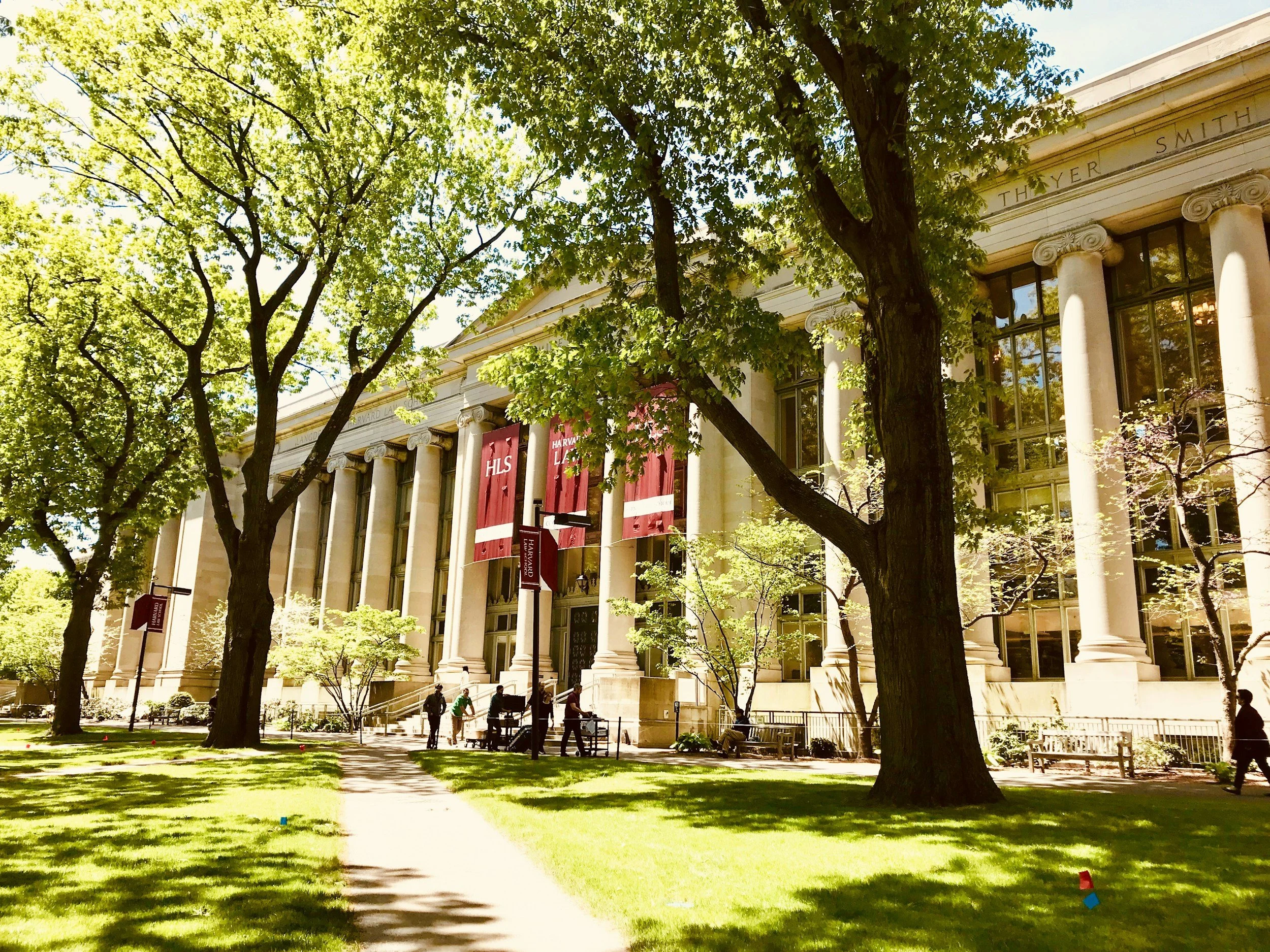
HARVARD TAKES ON GRADE INFLATION

As a major upset to many Harvard students – but a major win to most of its faculty – Harvard passed a resolution designed to curb grade inflation with a 20% cap on A grades! Starting in 2027, only around ⅕ of students in a class can receive an A, a decision made to “help distinguish exceptional work from merely strong performance.” Of course, students were strongly opposed to the initial proposal, and some professors worried it would put too many constraints on their evaluation practices. Nevertheless, nearly 70% of faculty ultimately agreed to move forward with the proposal. At a school with a reputation like Harvard’s, this does make some sense, although we sympathize with an incoming class now worried about GPAs. But the second part of the proposal should offer some comfort: many rewards and honors will be based on percentile rankings rather than letter grades. A major takeaway is that other schools might see this as an opportunity to start revising their own grading practices, so future students should consider early how they will try to stand out in their classes. 
NAACP ENCOURAGES ATHLETES TO GO ‘OUT OF BOUNDS’

The Supreme Court’s recent ruling on voting rights may have consequences in higher education, at least in the Southern states that are likely to be the most impacted. The NAACP has launched a campaign, “Out of Bounds,” that asks Black athletes and fans of collegiate sports to limit financial support at public universities in states that have actively moved to dismantle Black political representation. The NAACP argues that some states benefit significantly from the contributions of Black student-athletes while simultaneously advancing policies that it believes reduce Black political representation. The campaign encourages Black student-athletes to consider the political climate of a state when choosing where to enroll and to use their platforms to advocate for issues they care about.

SEXUAL ASSAULT AT UC SANTA BARBARA

Unfortunately, campus safety remains an important topic for students and families as they evaluate colleges; on May 9th, a UC Santa Barbara first-year student was sexually assaulted in campus housing. The student, identified here as “Jane Doe,” met the perpetrator at a fraternity party and was assaulted shortly after at the Tropicana Gardens student housing apartments. Unfortunately, the perpetrator remains at large. While UCSB Chancellor Dennis Assanis assures the community that the university is taking all the right steps in the matter, many students feel differently and are using social media to encourage “community members to email Assanis and demand that he speak to the survivor’s family and attorney.” They’ve also referenced criticism of Assanis’s handling of another sexual assault case when he served as President of the University of Delaware. While this is a very delicate issue, it is certainly not unique to UCSB or UD; we encourage prospective students to investigate campus safety resources, emergency procedures, transportation options, and support services when evaluating all colleges.

BEST ARTICLES OF THE WEEK

For many students hoping to study medicine, it’s definitely worth considering the pros and cons of the nurse practitioner route. According to the Wall Street Journal, the job market for nurse practitioners is booming! The primary reason is that there just aren’t enough medical doctors to deal with patients seeking mostly basic and routine care, like prescription management and treatment of colds and flus – and NPs don’t cost nearly as much as MDs. For prospective students of medicine, becoming an NP also has many benefits, ranging from shorter degree programs (often just two years) to significantly fewer student loans. So while the salary may be less than that of a primary care physician, a nurse practitioner can still earn around $132k annually while having more free time and far less debt.

But physicians warn that leaning too heavily on nurse practitioners is risky business – without physician oversight, NPs risk overlooking symptoms of more severe problems that they might assume are simply sore throats, and hospitals note that nurse practitioners are often requesting more tests than physicians, which can drive up costs. And many doctors argue that patients would prefer to meet an actual physician in an exam room. But Benjamin McMichael, a University of Alabama economist who found that most people head to the hospital for fairly routine reasons, makes a great point: “a lot of people never get to that exam room.” The real takeaway here is that there are many paths to success in the medical field, and it's worth considering whether your passion is for specialized medical treatment or general care, as well as the associated costs.

Whatever path you choose, at least one Amherst College professor thinks your college education should be… fun? Describing a boisterous and active classroom discussion of a 19th-century novel, Professor Michael A. Elliot argues in The Atlantic the need for more engaging and playful experiences in college courses – a perspective shared by our own DCCC essay coach and University of Maryland Senior Lecturer, Dr. Alan Montroso! The classroom is a space for meaningful conversation and engagement with complex ideas; critical thinking develops best when the mind is actively engaged. But the humanities, where this kind of education is most often found, are also in decline, as these kinds of skills are not seen as impactful on the job market. Yet how can we solve problems without careful consideration and deep thought? As Elliot writes about the many issues we face today, “they require citizens who can listen carefully, argue charitably, tolerate complexity, and resist the pull of the obvious. The seminar room, at its best, is where that tolerance is built.”

So while it’s not very likely your economics or biochem courses will be as “fun” as your humanities ones, don’t overlook the importance of a well-rounded education – college is about more than just landing a lucrative job (though of course you want that too!); it’s about shaping who you are as a person, one who can think deeply, hold meaningful conversation, and solve difficult problems – all skills your English professors are trying to instill… and maybe with a bit of laughter and play!

OFFICE HAPPENINGS

It’s a busy time here at DCCC. While several of our kids are basically done with their Common App essays, others are just getting started on the process! But it is definitely the season for the biggest essay of them all – so make sure to start booking some appointments before the summer sun, beach vacations, and sleepaway camps become more appealing to you than writing college application essays! 😎

check out some of our other posts for more on recent goings-on at harvard!
Weekly Update: July 29

Our last blog post before the 2024-2025 admissions cycle formally begins on Thursday!!!

BIGGEST COLLEGE-RELATED NEWS OF THE WEEK

W&M TO OFFER VIRGINIA’S FIRST B.S. DEGREE IN MARINE SCIENCE THANKS TO BATTEN GENEROSITY

Every year, a handful of our former clients work with us on their “Batten School” applications during their second year at UVA. And by “Batten School,” I mean the Frank Batten School of Leadership and Public Policy (which, as an aside, has some great undergraduate opportunities - check it out!). Now, the Commonwealth has a new Batten School on the horizon, thanks to Frank Batten’s wife, Jane Batten: the Batten School of Coastal and Marine Science at the College of William & Mary. Mrs. Batten’s “transformational” $100 million gift is the largest in William & Mary’s history, and will result in truly incredible opportunities for students interested in marine science and related fields — including the first Bachelor of Science degree in marine science at a public university in Virginia. We’re really excited to learn more details about the Batten School’s offerings in the months to come — or should we refer to it as the Batten School 2.0?

SCHEV APPROVES BRAND-NEW WILLIAM & MARY SCHOOL OF COMPUTING, DATA SCIENCES AND PHYSICS

It has been quite a week for STEM programs at William & Mary! The State Council of Higher Education for Virginia, more commonly known as SCHEV, just approved the College’s first new undergraduate division in fifty years: the School of Computing, Data Sciences, and Physics. This new school will bring together four of W&M’s top-performing programs: applied science, computer science, data science, and physics. These areas are seeing tremendous growth and are critical for preparing students for the future. Think machine learning, AI, and computational modeling — the skills of tomorrow! This move represents a huge leap forward for the university. The school will be housed in the heart of the campus, within the new Integrated Science Center. Set to open in Fall 2025, the cutting-edge space is designed to foster interdisciplinary learning.

DEFERRALS ARE BACK AT UVA

We have some news out of Charlottesville this week, too. Long-time blog readers may remember that UVA stopped deferring ED and EA applicants to the regular decision pool during this past admissions cycle. Instead, all ED and EA applicants were either admitted, denied, or placed on a waitlist. My understanding is that putting the students on a waitlist right off the bat was meant to help them achieve realistic expectations of their (very low) chances of eventual admission. I really liked this, personally! Especially for kids who applied early decision, it was nice to help them come to terms with the fact that they had already exhausted their best shot at admission and should move on. Well, in an unexpected pivot, deferrals are now back! Check out UVA's updated Admissions FAQs for more details.

VARSITY PICKLEBALL IS NOW A THING

Have you caught the pickleball bug? I feel a little behind the curve because it seems like everyone is playing and I never have! That’s especially the case in Montgomery County: MCPS is officially the first school system in the country to introduce pickleball as a varsity sport! MCPS officials hope that students of all abilities can pick up pickleball as a stress reliever and lifetime sport. “Across all ages [and] demographics, pickleball is fun and it leads to lifelong health and well-being,” noted Dr. Jeff Sullivan of MCPS.

BEST ARTICLES OF THE WEEK

Bloomberg Businessweek published a really fascinating piece called the Miseducation of America’s Nurse Practitioners (Apple News subscribers can get past the paywall!). Nurse practitioners are able to operate like doctors in many ways — they can make diagnoses and prescribe medications — but they have significantly less training. And in many cases, they are simply unprepared to be doing what they are doing. Bloomberg blames this on a “surging number of programs” that do not have a standardized curriculum and often accept more or less anyone who applies. “The former director of the largest NP program in the country says she can’t recall denying acceptance to a single student,” the article reads. Even worse, many of these new online programs take place asynchronously, with outdated lectures. Patients are suffering, and in some cases, dying, as a result. Awful! Full disclosure, I see a NP myself who I love, and my kids see the most amazing NPs as well. But it sounds like nursing may ultimately become the type of career in which college/graduate school choices could have long-term professional implications.

Have you caught the Olympics bug? Check out NCAA footprint at the Olympics, which details the significant impact that 1100+ current and former NCAA athletes are making at the 2024 Paris Olympics. They represent a substantial portion of the Olympic roster across various sports and countries, although USA is dominating: Team USA’s 385 NCAA athletes make up 65% of its roster! Southern California, Stanford, and Michigan have the greatest representation.

OFFICE HAPPENINGS

It’s the calm before the storm in our office as we wrap up everything we need to do before August 1! This has been a strange year as colleges are so, so slow to release their respective school-specific essay prompts. Never in my career have I seen anything like this before. We normally have about half the essay prompts available to us by July 15, and here we are on July 29 with a very small fraction of essays!

I suspect that this is a result of individual schools considering additional changes to their essays in the wake of last year’s Supreme Court ruling. As we discussed at length last year, the timing of the ruling was such that many colleges did change their prompts after the fact and made last-minute adjustments, but the changes could not go through the typical supplemental essay review process involving lots of different stakeholders.

Now that a full cycle has passed and admissions offices were able to assess the prompts more comprehensively, we are likely to see a number of changes again. Stay tuned!

Careers in Nursing

Happy National Nurses Week! We want to extend a big thank you to all of the amazing nurses out there - we appreciate your tireless efforts to care for patients!

As we take time to honor nurses who play vital roles as advocates, educators, and caregivers, we thought it would be a great opportunity to spotlight nursing career options and educational pathways! After all, there is a nursing shortage - and the profession can offer security, flexibility, and a nice paycheck!

TYPES OF NURSES

Registered Nurse

Registered nurses (RNs) typically provide direct patient care in a variety of settings, such as hospitals, clinics, and nursing homes. They perform tasks such as taking vital signs, administering medications, and assisting with procedures. As for education, RNs can either complete a two-year associate's degree (ADN) or a four-year bachelor’s in nursing (BSN). The BSN is highly recommended, and even required in some states and healthcare settings. RNs may also seek additional certifications after they graduate and gain experience, especially if they are interested in areas such as oncology, pediatric, or critical care nursing. 

The average annual salary for an RN in the United States is $77,600, according to the U.S. Bureau of Labor Statistics. However, salaries can be higher depending upon education and geography. For example, nurses in California have an annual mean wage of $133,340! And nurses in the DC area can make nearly $100,000 each year. 

Nurse Practitioner

In contrast to RNs, nurse practitioners (NPs) are advanced practice nurses who have completed additional education and training beyond the RN level. They are authorized to diagnose and treat illnesses, prescribe medications, and order diagnostic tests. NPs often work independently or in collaboration with physicians, and they may specialize in areas such as pediatrics, women's health, or mental health. Because of their specializations and advanced education, NPs stand to earn more than registered nurses. In 2021, the median salary for an NP was almost $110,000, and in some parts of the U.S., NPs made approximately $150,000!

Nurse Anesthetist

Certified Registered Nurse Anesthetists (CRNAs) are advanced practice registered nurses who specialize in administering anesthesia to patients during surgical and medical procedures. They work closely with physicians, surgeons, and other healthcare professionals to ensure that patients receive safe and effective anesthesia care. CRNAs are responsible for assessing patients' medical histories, monitoring vital signs during anesthesia administration, and adjusting anesthesia levels as needed throughout procedures. They also provide post-operative care to patients, ensuring that they recover safely from anesthesia and that any pain or discomfort is managed. CRNAs are required to have a master's degree in nursing as well as certification through the National Board of Certification and Recertification for Nurse Anesthetists.

Becoming a CRNA requires a lot of additional education and training, but the investment is worth it! The average CRNA salary is approximately $123,000 per year, and in some areas of the country (like the DMV), CRNAs make upwards of $200,000. Plus, CRNA jobs are in high demand. Employment in this field is expected to grow 41% by 2031! 

TRADITIONAL AND NONTRADITIONAL PATHWAYS TO BECOMING A NURSE

There are two main pathways to becoming a nurse: traditional and nontraditional. The traditional pathway involves completing a nursing program at a college or university and earning a nursing degree, such as an associate's or bachelor's degree in nursing. This pathway typically takes 2-4 years to complete and involves coursework, clinical experiences, and passing the NCLEX-RN licensure exam. 

The nontraditional pathways involve alternative routes to becoming a nurse, such as completing an accelerated nursing program or earning a nursing degree online. These pathways are designed for individuals who already have a bachelor's degree in another field and wish to transition to nursing. Nontraditional pathways may offer more flexibility and convenience, but they also require a strong commitment to self-directed learning and may have additional requirements, such as completing prerequisite coursework or passing additional exams. 

HOW TO CHOOSE THE RIGHT NURSING PROGRAM FOR YOU

Whether you’re pursuing a traditional or nontraditional pathway, there are many things you want to consider as you research nursing programs. Here are questions to help guide you.

TRADITIONAL PATHWAY - BSN degree:

  • Is it a 4 year, direct-entry program? This is the best choice for most students because there are no more hoops to jump through in college.

  • Where will your clinical experience take place? For example, nursing students at Clemson will be in one of two separate clinical cohorts beginning during junior year, one in Clemson and one in Greenville. Would this be ok with you to be at a separate campus?

  • What are the alumni NCLEX pass rates for the program? If you can't pass this exam, you can't become a registered nurse, so it's very important to go to a school that prepares students well.

NONTRADITIONAL PATHWAY - any degree:

Note - if you are sure you want to be a nurse when you are applying to college, this is not the path we would recommend unless you have a particular reason for it - this is typically more appropriate for people who decide to be a nurse later or are trying to keep their options open for specific reasons.

  • What types of prerequisites will you need to be able to get into a post-baccalaureate nursing program - will you be able to take these at the college of your choice?

  • What types of experiences will you need and will you be able to do those at the college of your choice? (for example, a certain number of hours of patient care or service work in health care)?

Here are two examples of nontraditional programs offered by universities:

George Washington University: GW offers an accelerated BSN program for those who have already earned their bachelor’s degree in a different field and would like to start a career in nursing. Students can earn their BSN in four consecutive semesters on site at GW’s Virginia Science and Technology Campus in Ashburn, VA. In order to begin the program, though, students must complete a certain number of prerequisite courses in areas such as Statistics, Nutrition, and Natural Sciences. If a student has not completed these courses in their previous degree programs, no worries! GW offers these courses and students can complete them online.

University of Pennsylvania: At UPenn, students with a bachelor’s degree in another field can earn a nursing degree in just 15 months through the university’s accelerated BSN program. The program has two options: BSN Second Degree- which leads to a bachelor’s in nursing- or BSN/MSN- which allows students to earn a graduate degree as well. The BSN/MSN pathway is a great choice for those who know they want to pursue a specialization that requires graduate coursework. Similar to GW, applicants must complete several prerequisite courses before being considered for admissions into the program. These courses include chemistry, biology, nutrition, and statistics, among others.

LOOKING FOR A COLLEGE WITH A GREAT NURSING PROGRAM?

We can’t possibly begin to list all of the colleges and universities with great nursing programs. However, we’re sharing a few of our favorites that might help you get started if you’re a high school student hoping to major in nursing in the future.

University of Pennsylvania 

What we like about this program: There’s a reason UPenn’s nursing program is ranked as one of the best in the country. There are amazing opportunities for students to gain clinical experience and conduct research at some of the best hospitals in the country. Plus, UPenn offers several minors, such as Nutrition, Global Health, and Health Communications, which reflect some of the most relevant and pressing issues in the healthcare world.

Clemson University

What we like about this program: Clemson’s nursing program is nationally recognized and increasing in popularity. In an effort to meet the demands of student interest, as well the need for nurses in the industry, the university recently created The Clemson Nursing Expansion Program, which has expanded enrollment in the program, as well as clinical placements in the area. Despite the expansion, admissions is extremely competitive, but students are sure to get state-of-the-art-training and a lot of opportunities to support local communities in South Carolina. 

Georgetown University

What we like about this program: Experience, experience, experience! Georgetown’s School of Nursing has an overwhelming number of options for students to gain hands-on training, from working in local DC hospitals to taking part in the Tanzania Healthcare Experiential Learning Initiative. We also love that the program incorporates an emphasis on social justice and community connections!