Intellectual Freedom

Weekly Update: June 22

It gets hot around here so early in the year that it’s easy to forget summer doesn’t actually begin until June 21st. But now we can celebrate because summer has officially arrived – and what a beautiful arrival it was, especially since it was Father’s Day on Sunday as well. I hope everyone had a chance to enjoy some time with family, friends, and a little sunshine on the longest day of the year. Since the office was also closed for Juneteenth, it felt like a three-day weekend. Now it's time to get back to work, so here's a look at what's been happening in higher education recently.

BIGGEST COLLEGE-RELATED NEWS OF THE WEEK

WISCONSIN ENDS GRANT PROGRAM FOR MINORITY STUDENTS

The Wisconsin Supreme Court has just unanimously ruled to end its minority grant program following the precedent set by the U.S. Supreme Court in 2023. Established in 1985, the grant program provided financial support for minority students, but as the vice president of the Wisconsin Institute for Law and Liberty argued, “Race cannot be used to dole out scholarships and other financial aid.” Supporters of the ruling argue that it favors taxpayers who can now challenge other race-based programs in the court; but some court justices, even after voting to end the program, still acknowledge the racial disparities in the state and uneven access to education faced by many students of color.

COLLEGE ATHLETES SHINE IN WORLD CUP

With so much attention on the World Cup this year, especially with the US serving as one of the three host countries, it’s pretty cool to see just how many players have connections to college soccer. That may reflect a uniquely American perspective, since soccer often takes a backseat here to basketball and football (well, American football!), but globally the World Cup remains the biggest sporting event in the world. The NCAA recently highlighted the many collegiate athletes who found their way into this important international competition through college soccer. The list is extensive, and it highlights the important role college soccer plays in developing World Cup talent – as the NCAA puts it, such representation is “a powerful reminder that the pathway to the FIFA World Cup increasingly runs through college campuses.”

FLORIDA APPROVES CONTROVERSIAL CAMPUS TRANSFER

In a move that sparked strong reactions across Florida higher education, Governor Ron DeSantis has backed the transfer of the Sarasota-Manatee campus of the University of South Florida to New College of Florida as part of a broader effort to reshape higher education in the state. The transfer has now been approved and will be implemented over the coming years through a teach-out process for current USF students. Supporters argue the move is part of a broader effort to reshape higher education, while critics – especially students and faculty of the USF school as well as area businesses – argue it reflects political priorities rather than privileging the needs of the community. The Sarasota-Manatee campus has been a thriving part of the area’s economy and overall well-being, with important programs in nursing, hospitality, and tourism. De Santis’s plan has created a lot of uncertainty about what this transition will mean over the long term. Critics have also questioned the cost of the project and the process behind the decision. At the very least, presently-enrolled students have been promised the right to finish their degree programs before the transition.

EXTREME MEASURES IN INDIA TO ENSURE FAIR TESTING

Well, if you thought some of our security procedures to ensure fair standardized testing were intense, it looks even more strict in India right now. A college entrance exam for prospective medical students was cancelled earlier this year after allegations that the exam had been leaked on a messaging app called Telegram. Now, the government has increased security measures for the rescheduled exam, including military involvement and temporary restrictions on access to Telegram in the days surrounding the test. Critics argue that these steps are excessive and raise some legal concerns – but India has actually shut down the internet across entire cities during major exams before, so extraordinary measures are not uncommon despite the disruption to local communities. And given that over 2 million people are competing for just 10,000 seats in medical schools across the country, I can sort of see the logic – although I’m grateful we don’t take things that far in the U.S.!

BEST ARTICLES OF THE WEEK

As college tuition continues to soar and the current administration demands reform in higher ed, the public is left wondering: what is the real purpose of college, anyway? Not only is that an excellent question, but it’s one that many colleges and universities are increasingly trying to answer for themselves and for the public. Skepticism about higher education has been growing for years, with concerns ranging from cost and career outcomes to questions about the role of universities in their communities. In response, several academic institutions are becoming more vocal about their goals and the steps they are taking to address growing doubts about the mission of higher ed. A statement from the Association of American Universities, for instance, “emphasized that universities serve the public interest through research that drives the economy, cures diseases, and protects military service members, as well as through teaching that trains the next generation of leaders.” At the same time, universities are also emphasizing the importance of remaining independent from political pressures, especially to ensure that research funding and grants are awarded fairly and free from political influence.

In a similar vein, Fox News highlighted several ways that colleges might work to rebuild that public trust. One major theme was communication and community involvement, especially engaging local high schools. They gave the example of Indianapolis, where improvements in college counseling and local education initiatives have led to better student preparation for college; students with a 3.0 GPA or higher are also automatically enrolled at IU Indianapolis. Meanwhile, they argue that colleges need to get ahead of the AI concerns, ensuring they are clear about how they will prepare students to use these emerging technologies while also helping them navigate a changing job market – and helping the public understand that the threats may not be as dire as many assume. More broadly, they stressed the need for colleges to ensure that they are offering the right skills for the job market in order to justify tuition. Needless to say, it’s a really interesting moment in higher education. Given the price tag, I think it’s quite reasonable for families to want colleges to better articulate what they stand for and what they’re offering their students in return.

The kind of community involvement they recommend is, in some ways, exactly what Colby College is doing in the state of Maine – but in a slightly different way. After the charming little fishing village of Port Clyde was destroyed in a fire in 2023, the community was devastated. When the initial plans to restore the picturesque tourist destination fell through, Colby College stepped in. But the plan isn’t just restoration; it’s an entirely new vision for the village, one that will encourage growth while also affording the school itself new opportunities that align with its long-term goals. Colby plans to transform the village into an academic and research center focused on finding solutions to natural disasters and global climate change. And it’s not the first time the college has invested in surrounding communities, drawing on previous redevelopment successes in nearby Waterville and on Allen and Benner Islands. While some area residents are unsure what the future holds for Port Clyde, Colby is committed to ensuring that residents have a voice in the future. 

OFFICE HAPPENINGS

After that refreshing long weekend, we’re back and busier than ever, helping students put the final touches on their Common App essays and getting our generic supplemental essays ready and in good shape for repurposing – and keeping the World Cup on in the background, of course! 

Enjoy the week!

With the World Cup underway, here are a few other posts for our sports fans!

Weekly Update: March 19

Happy (belated) St. Patrick’s Day! For those of you in the DC area, I hope you get a chance to enjoy the cherry blossoms at the Tidal Basin this week – they’re finally here!

BIGGEST COLLEGE-RELATED NEWS OF THE WEEK

SURVEY FINDS COLLEGE STUDENTS PREFER CAMPUS GUN POLICIES

A new Gallup survey showed that 81% of current and prospective college students consider campus gun policies to be “at least somewhat important” in their decision to enroll, and 34% say they are “extremely important.” Notably, the results are similar across various demographics, regardless of age, gender, race/ethnicity and political party affiliation. The largest gap among subgroups is a nine-percentage-point difference between Democrats and Republicans. Despite that difference, however, the study still reflects a majority favoring campus gun policies, with 77 percent of Republican students considering gun policies to be important in their enrollment decisions, and 26 percent saying they are extremely important. In light of recent acts of gun violence on college campuses in North Carolina and Michigan, these results do not surprise me!

NAACP LETTER ASKS BLACK STUDENT-ATHLETES TO RECONSIDER ATTENDING FLORIDA COLLEGES

NAACP President and CEO Derrick Johnson sent a letter to the National Collegiate Athletic Association last week, asking Black student-athletes to reconsider their decisions to attend public colleges and universities in Florida. As I mentioned in my weekly update earlier this month, the University of Florida just closed down its diversity, equity and inclusion programs in order to comply with Gov. Ron DeSantis’ law prohibiting the use of state funding for DEI programs. Other public institutions in Florida, including Florida State University, have also followed suit.

FONTBONNE UNIVERSITY CLOSES, WASH U TO PURCHASE ITS CAMPUS

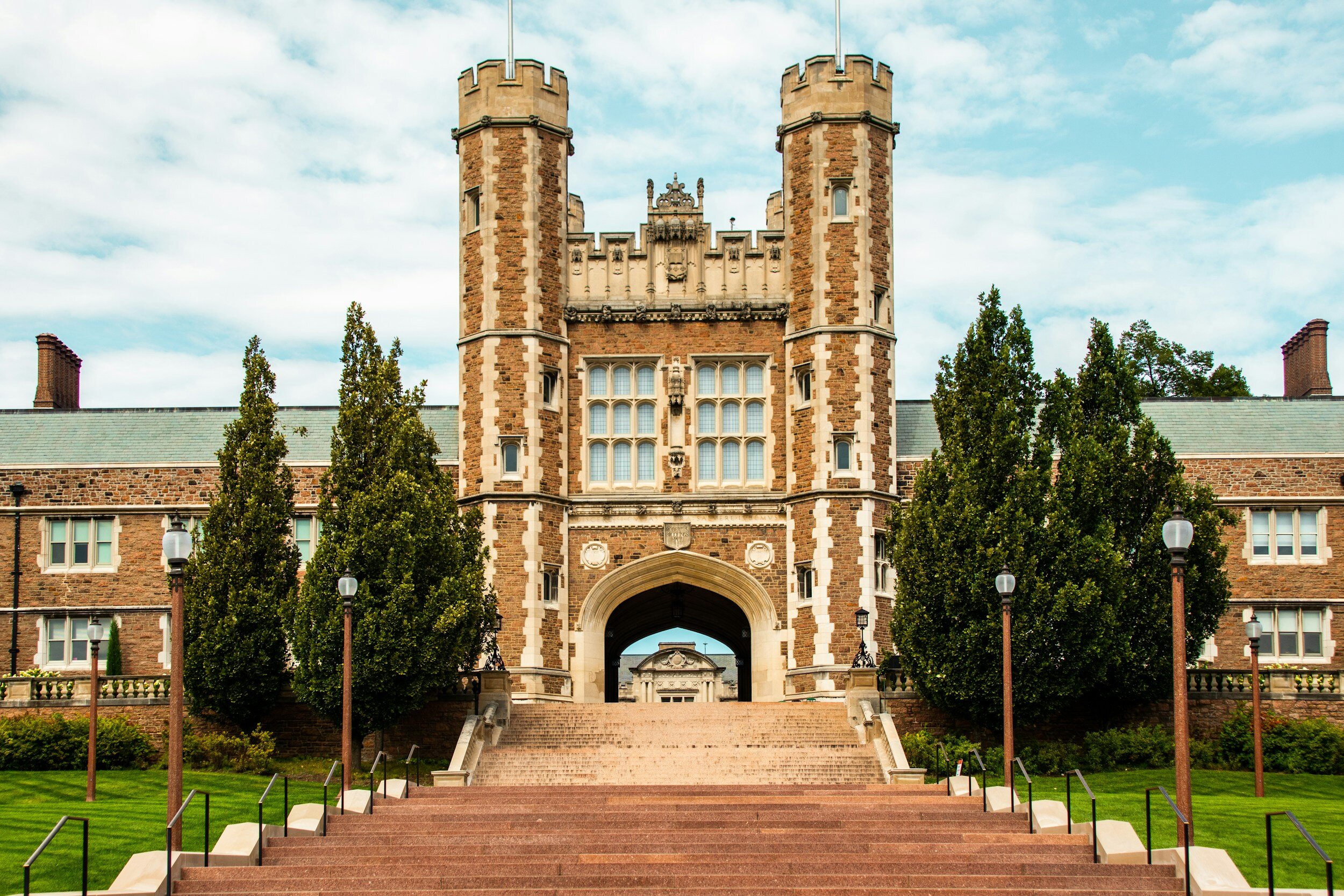
Fontbonne University in Clayton, Missouri, will be closing its doors next summer after struggling with declining enrollment and a shrinking endowment. Originally founded as a women’s college in 1923, the school has a history of being one of the country’s most diverse Catholic institutions of higher education; as of 2021, more than a quarter of its undergraduates are African-American.  After its Summer 2025 term, the property will be acquired by Washington University in St. Louis. Interestingly, the Fontbonne campus is located on the other side of Wash U’s “South 40,” where the residence halls are located.  As such, it is located closer to most of the students’ residence halls than the current Wash U academic buildings.  Although it is sad to see Fontbonne close, this will be a great expansion opportunity for Wash U!

MARCH MADNESS BEGINS

Selection Sunday is behind us and the NCAA tournament games kick off this evening with Wagner vs. Howard and Colorado State vs. Virginia. The First Four will finish up tomorrow with Grambling vs. Montana State and Colorado vs. Boise State… and then things will really kick into high gear on Thursday! We’ve written before about the impact of “Cinderella runs" on the admissions process, and it will be interesting to see what this year holds!

BEST ARTICLES OF THE WEEK

It’s been a challenging year in the college admissions world, to say the least, but we are making our way through it! I just read a Wall Street Journal article that summed it up this way: “This might be the most chaotic, frustrating, uncertain college-admissions cycle in recent history.”  

The WSJ highlighted three major factors that created this “perfect storm”: First, the Supreme Court ruling on affirmative action, which restricts how schools can consider an applicant’s race. As a result of this ruling, college applications cannot directly ask about race, but they can provide an opportunity in the essays for this information to be included. This has left many students uncertain whether disclosing their race and ethnicity would be beneficial or not to their application. On top of that, they have to figure out how to weave this information into their essays.

(Here at DCCC, we work with every single one of our students to write content on how their own unique and diverse backgrounds have impacted the person they are today. We then try to incorporate that particular content to fit college-specific supplemental essay prompts whenever possible, because colleges are looking for a class with diverse experiences and backgrounds. Sometimes these cover topics like race, ethnicity, and religion — but many times they don’t. Our students’ past essays on this topic have discussed the impacts of experiences as varied as frequent childhood relocations, to growing up with food allergies, to parental addiction and mental illness — and so many more. Everyone has something that has shaped their background in a unique way, even if it’s not immediately obvious.)

The second factor: test score confusion. We’ve heard it all – test-blind, test-optional, test-recommended, test-flexible and test-required. Understanding these new terms has added a layer of complication to the college application process, especially when students apply to colleges that require tests for certain majors or programs but don’t require them for others. Another consequence of schools not requiring test scores is that some students believe they don’t have to put any effort into prepping for them, only to realize too late that certain scholarships are tied to strong scores - or even worse, learning of last-minute policy changes at institutions that have begun to require them again. So: study for the SAT and ACT, kids! 

And lastly, the most impactful factor in upending this year’s college admissions cycle is the delayed Free Application for Federal Student Aid (FAFSA) process. Usually by this time of year, students are sorting through and comparing their financial aid offers. This year, however, due to a delayed release of the new FAFSA online application and an avalanche of technological glitches, the federal government is extremely delayed in sending colleges information about applicants’ family finances and how much federal aid they qualify for. This financial information is critical for colleges in calculating need-based aid and creating financial aid offers.

Absent these offers, students are facing the possibility of blindly deciding on colleges to meet enrollment deadlines without knowing the tuition costs in advance. Or, even worse, they may not be able to enroll at all, since many students cannot seriously consider college without financial aid. This could lead to enrollment decline, which, as we have seen, can impact the very existence of certain less-selective colleges. It is ironic that the very system that was designed to help lower-income students has been their biggest bar to college enrollment.   

How did we get here? I came across a recent New York Times article that had a good breakdown of how this happened.  In 2020, Congress ordered the Education Department to streamline the FAFSA process to make it easier and more accessible. The notoriously long and complex form was whittled down from over 100 questions to fewer than 40. Unfortunately, though, it was not released until the end of December, almost three months later than the regular October timeframe. In addition to technical malfunctions that locked students out of their applications, the new FAFSA required social security numbers for both students and their parents. Students with mixed-status families have been disproportionately affected, as FAFSA delays may cause them to miss scholarship and aid deadlines. 

Two weeks ago, when the Education Department came up with a resolution to the social security issue, they discovered 70,000 emails from student applicants sitting in an inbox, unread and unanswered. The Department is now faced with processing a landslide of applications and handling 70,000 emails…and counting. Yikes.

Despite these setbacks on the national level, our DCCC students have been able to navigate this year’s application process with success! We have been hearing good news from so many colleges, and we’ve managed to stay on track thanks to the tireless work of our dedicated counselors, students and families. We can’t wait for more good news to pour in. Way to go, everyone!

On a completely different note, I want to share an excellent article from the New York Times discussing the purpose of universities, and it had me nodding my head in agreement. According to the article, an “understanding,” or something like an unspoken contract, has always existed between American universities, the government, and the people. Universities provide education with the help of government funding and tax breaks, and faculty are given academic freedom when it comes to what and how they teach and research; they are – or should be – insulated from external pressures of politics and industry.  In return, universities cultivate a pluralistic democracy and produce an educated citizenry, allowing for economic mobility and a capitalist economy. 

Stanford international studies professor Anna Gryzmala-Busse stated that “if universities are not fulfilling these missions, and are seen as prioritizing other missions, that political bargain becomes fragile.” The article points out the dangers when universities stray from their essential duty by pushing a political agenda, consequently stifling intellectual discourse and freedom of thought among its faculty and students. A social justice mentality is counter-productive to the university’s work of fostering open dialogue with multiple perspectives. Universities are increasingly forced to quickly make official statements on polarizing, political issues; issues that scholars spend years studying and continually discussing. Political interference in a university destroys its academic freedom. 

The last paragraph stuck with me: “When universities become overly political, and tilt too far toward one end of the spectrum, they’re denying students and faculty the kind of open-ended inquiry and knowledge-seeking that has long been the basis of American higher education’s success.” Well, there’s food for thought!

OFFICE HAPPENINGS

I’m excited to share an article from Northern Virginia Magazine, in which I provide advice on making your final college decision! Decision day is just around the corner for many of you, and all of us at DCCC want to make sure you are as prepared as possible.

Scholarships, location, campus culture, post-graduation jobs – there are so many important factors weighed in the balance as you narrow down those college acceptances and decide which college is the right fit for you. So, mark May 1 on your calendar (unless your colleges delayed their deadlines due to the aforementioned FAFSA problems!) and check out the article!

Anybody else go to the ACC tournament in DC last week/weekend? The Virginia games, both of which went into overtime, were insane! Especially Friday, wow. For those of you who didn’t catch it, they had a five-point lead in the last fifty seconds of regulation, and a three-point lead in the last five seconds. Despite ESPN indicating that their chances of winning at that point were over 98%, it was not to be: a very unfortunate series of events ended up resulting in a loss to NC State.

Fingers crossed for a win against Colorado State tonight!